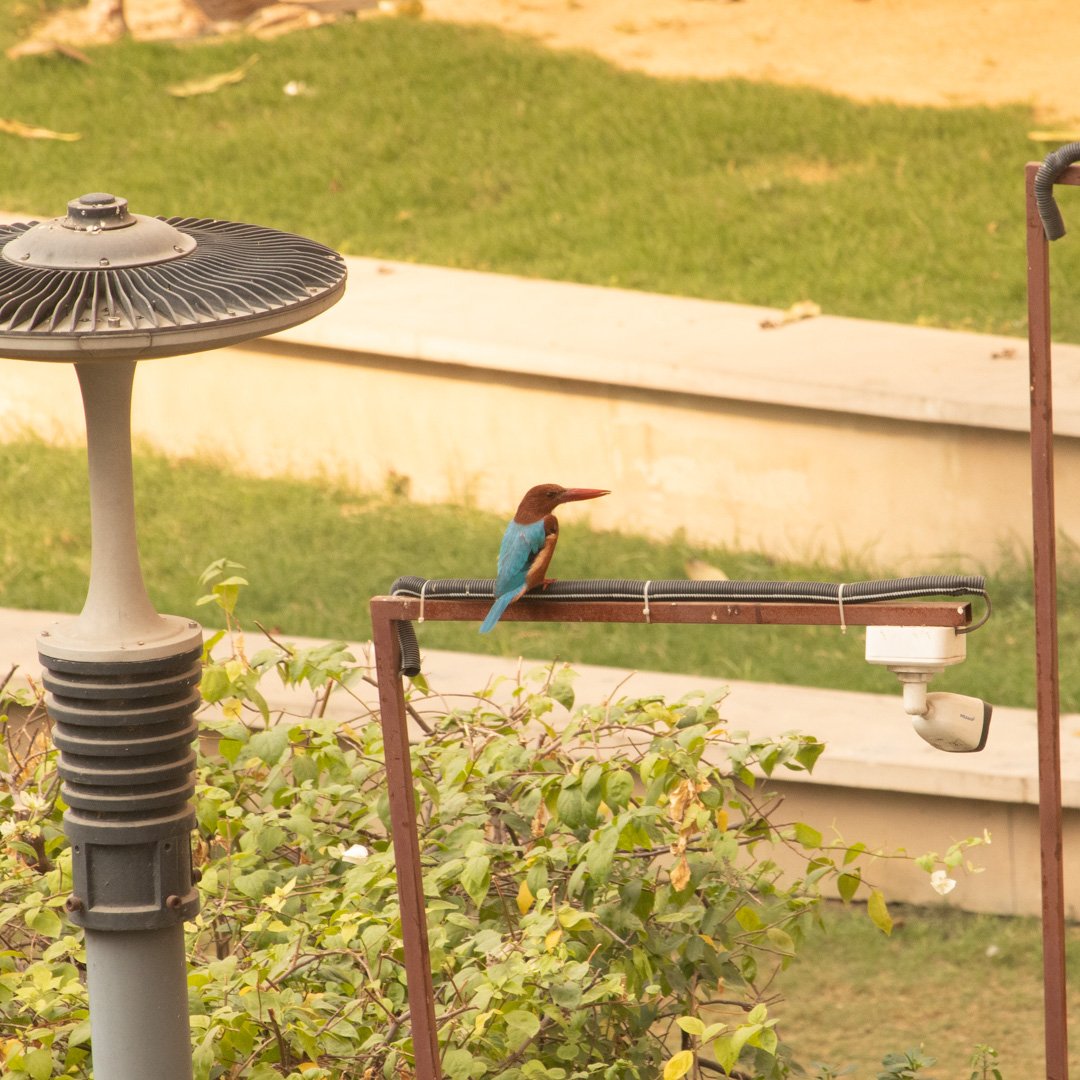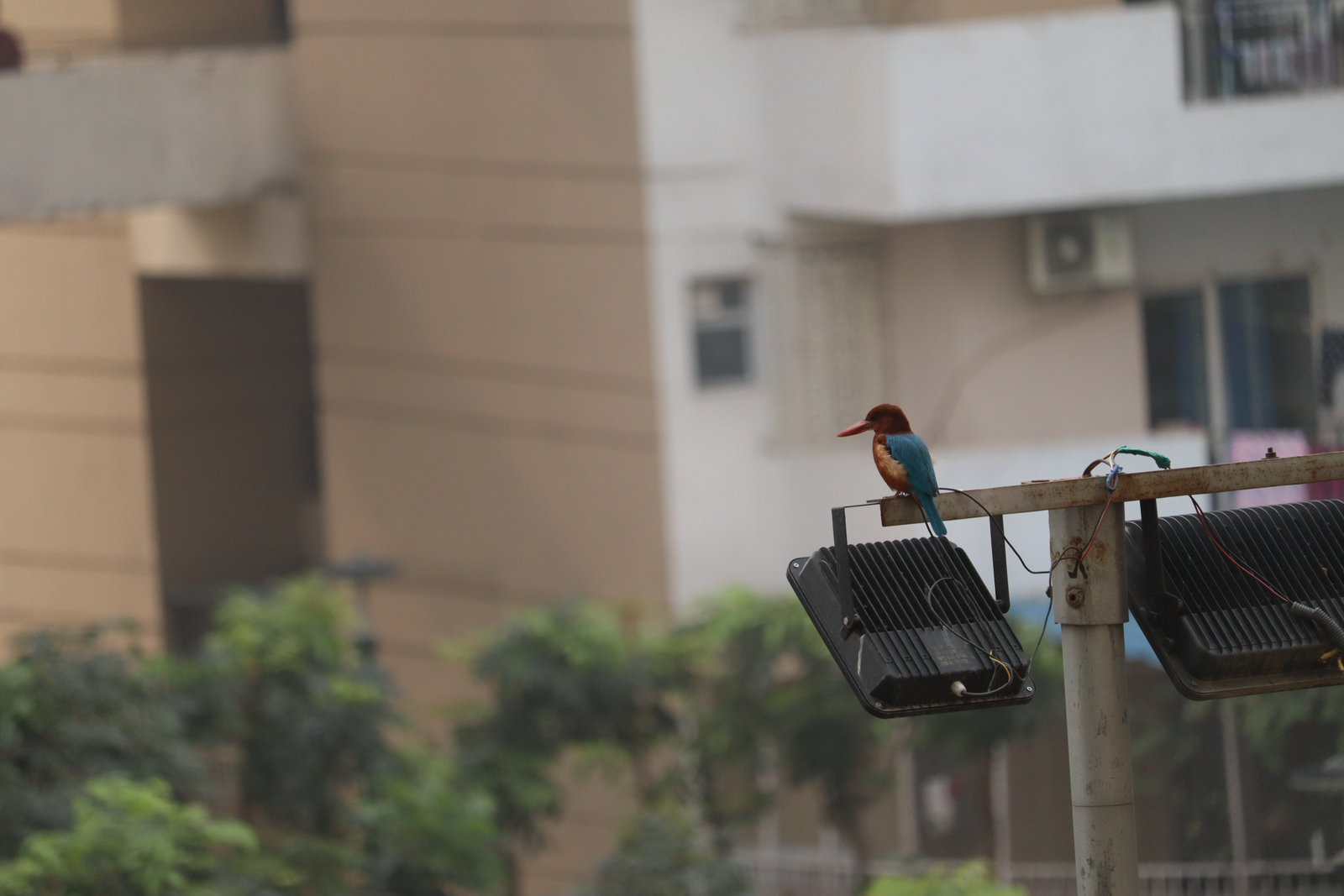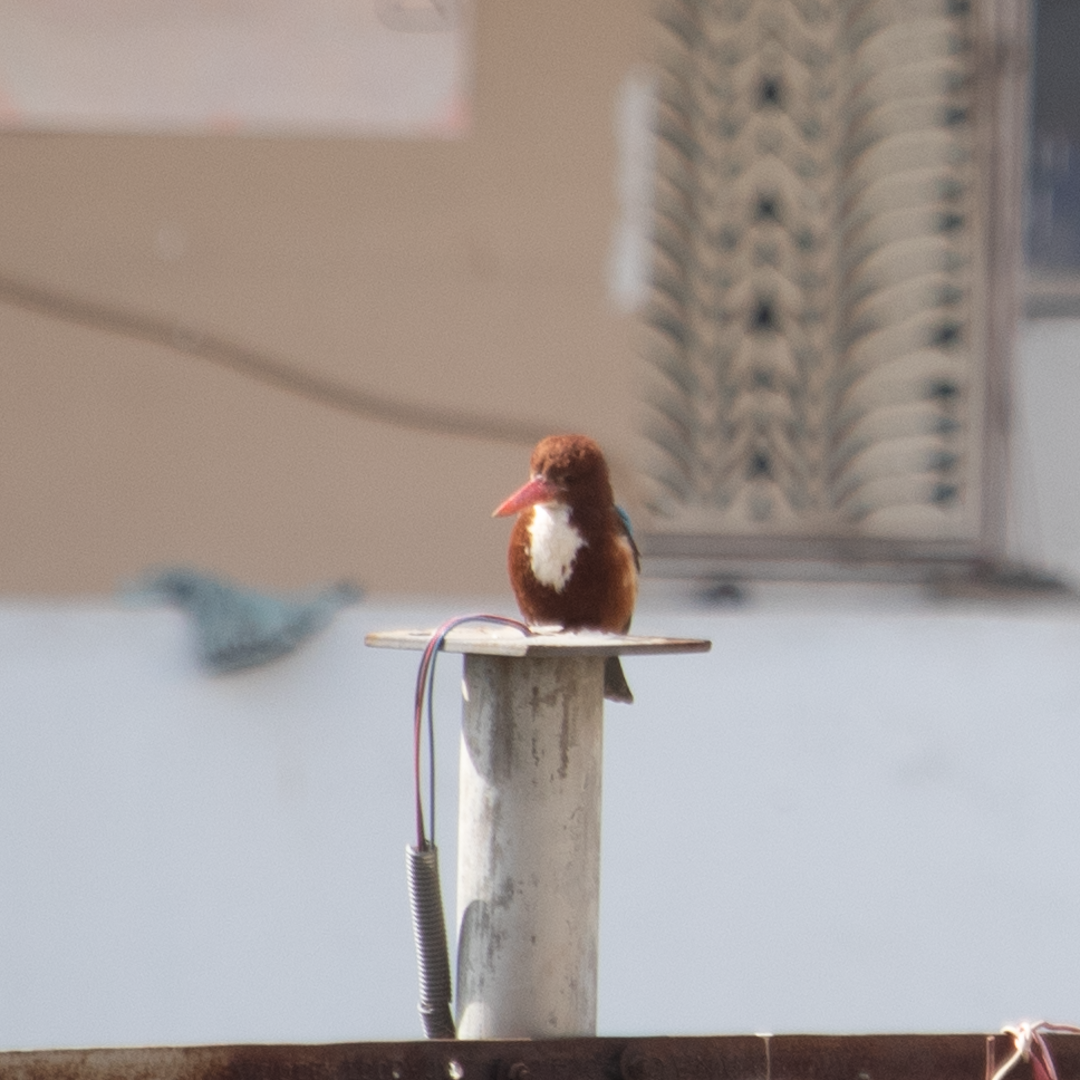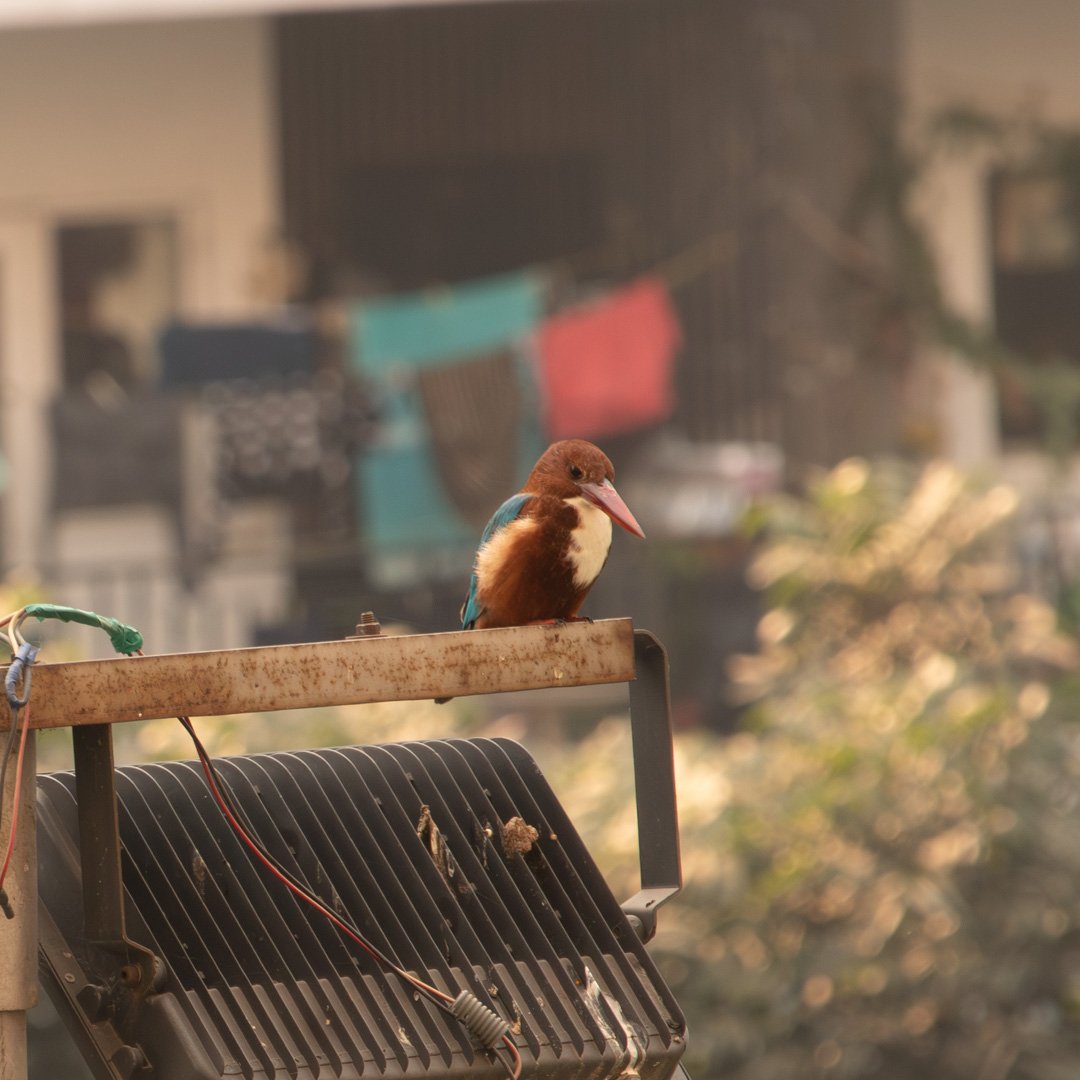
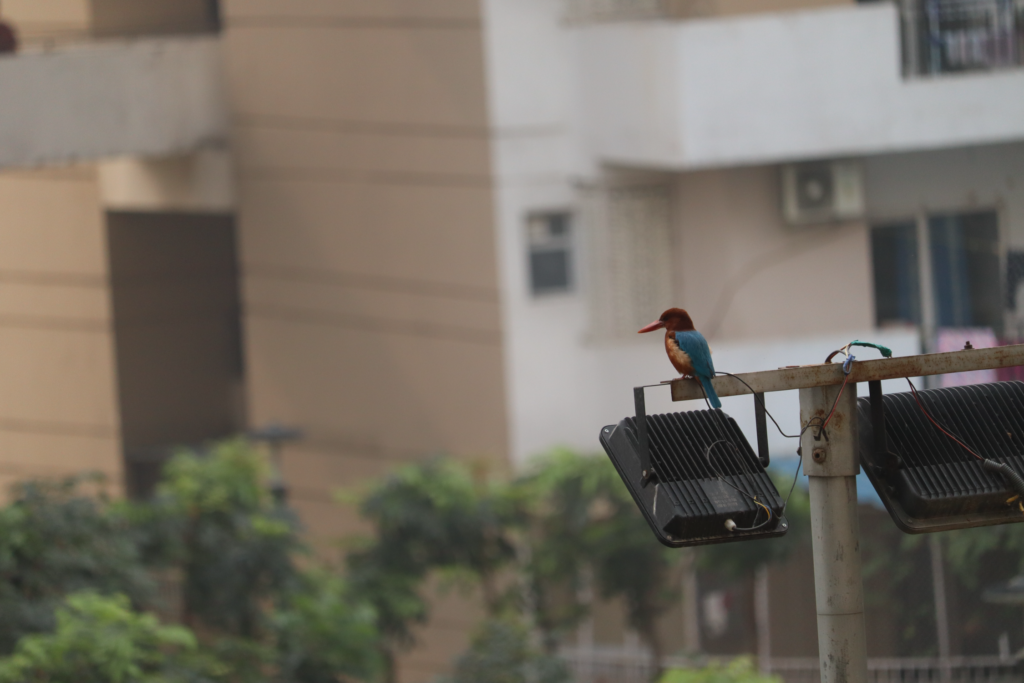
The best time to spot the adorable white-breasted kingfisher (Halcyon smyrnensis) in Noida is from December to February.
Alcedinidae is a family of birds in coraciiformes, and are related to rollers, like the famous Indian roller. They are quite distinct from there related birds because of the more robust and thick beak. They are found on all continents but not in Antartica.
Taxonomy: Birds (Aves) > Coraciiformes > Alcedinidae
The family is divided in to 3 subfamilies, namely Alcedininae, the river kingfishers, Cerylinae, the water kingfishers, and Halcyoninae, the tree kingfishers.
Usually Alcedininae, or river kingfishers have short tails and prefer envoirments near rivers. This subfamily includes the famous common kingfisher in Europe. On to Cerylinae, the water kingfishers which have somewhat longer tails and also prefer moist riverine envoirments. Their famous member is the pied kingfisher. All the New world kingfishers yet known belong to this subfamily. Lastly the halcyoninae, the tree kingfishers, with long tails, sometimes extremely long as in Tanysiptera species of The Papuan islands. Kingfishers of this subfamily are rather more independent of water, that gave them access to more habitats, and led to rapid diversification. Most kingfisher species, including the odd-billed kookaburras of Australia, represent this subfamily.
An individual of halcyon smyrnensis, which is a representative of the halcyoninae | Photos are my own.
There are 118 species of kingfishers, 6 of which are known from the new world, and the remaining 112 from the old world, most species are only known from Pacific, Philippine, Indonesian, or Papuan islands, and all 6 new world kingfishers are from cerylinae, which is the smallest subfamily, only containing 9 species worldwide. 19 genera exist, out of which 3 are in cerylinae, 4 in alcedininae, and 12 in the halcyoninae. The 2 largest genera are Todiramphus and Ceyx, which currently contain about 30 and 24 species, making up a little less than half of all species.
You may also like to read
These are not just underestimated, they remain unnoticed, living life a subterranean life, with only their calls reaching our ears. Dig into the world of these creatures by reading this blog.
All the innocence of this little insect had been concealed by myths from the past.
They entered the new world 2 times. The first time was when the ancestors of chloroceryle entered America and the second was quite recent, as molecular studies suggest, which was when the ancestors of megaceryle torquata and alcyone did. The 2 megaceryles now present in the americas would have probably got to the americas through Africa. There is a visible and distinct transition between species: Just compare Megaceryle lugubris with maxima, then maxima with torquata, and then torquata with alcyone as on wikipedia’s megaceryle article.
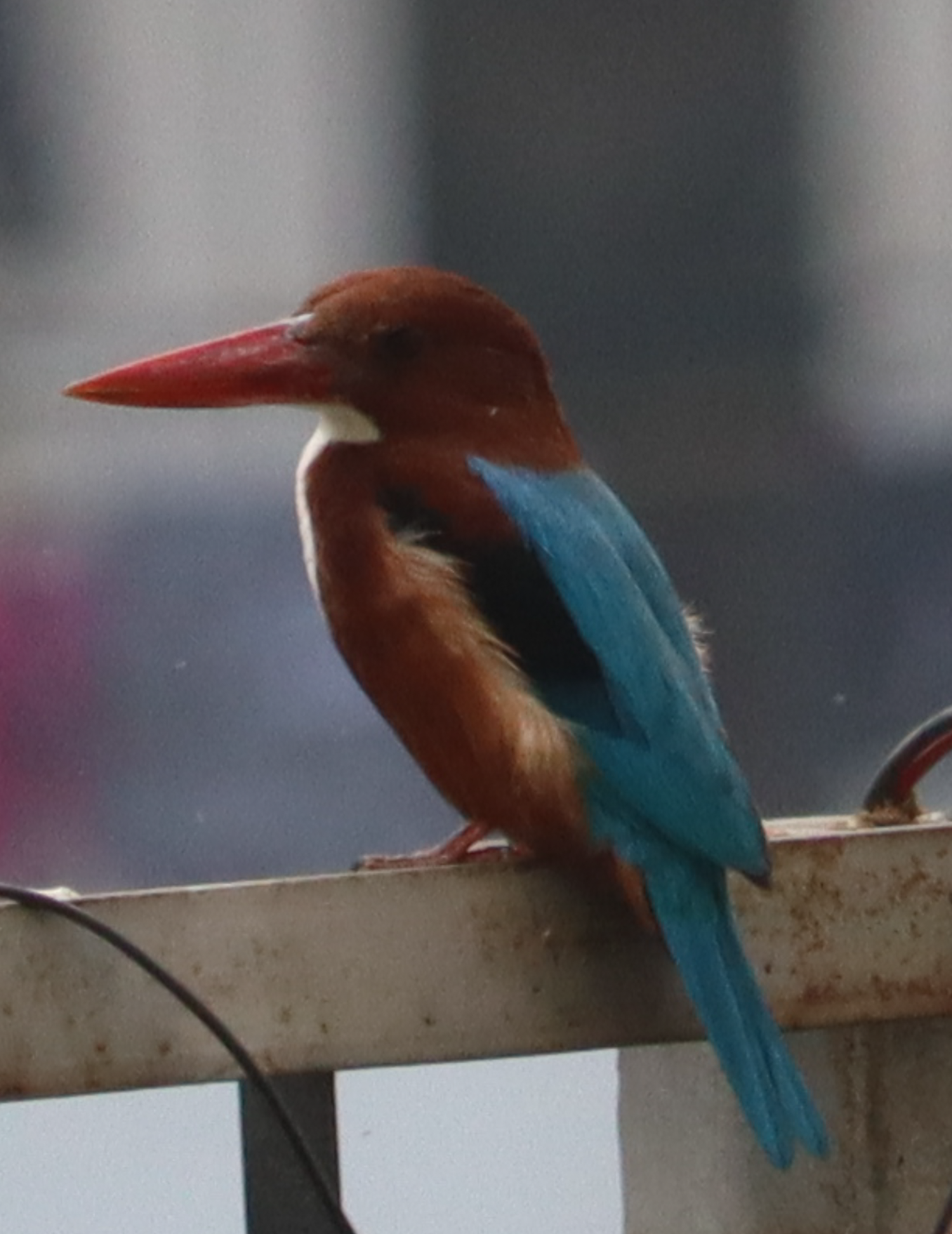
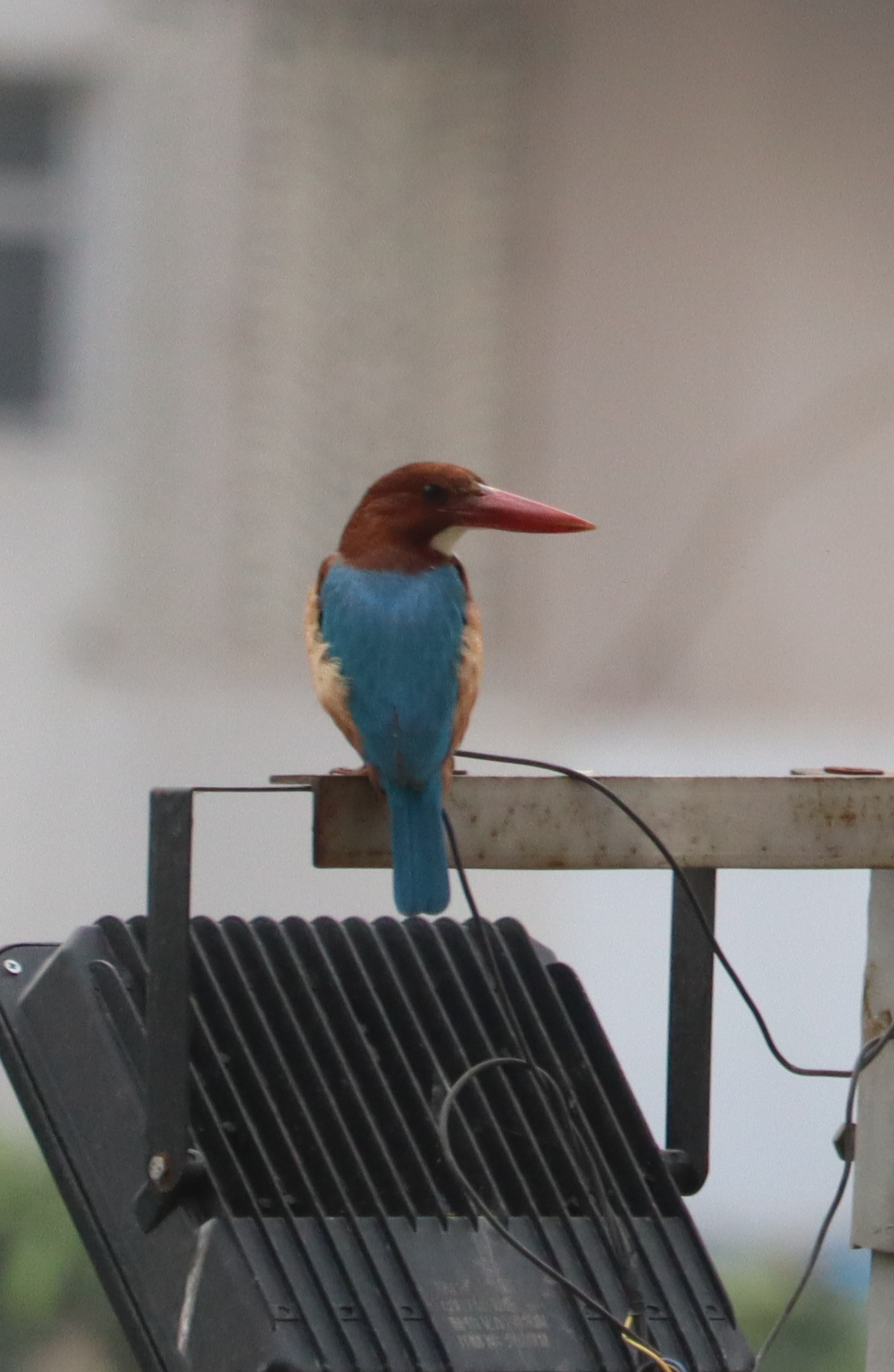
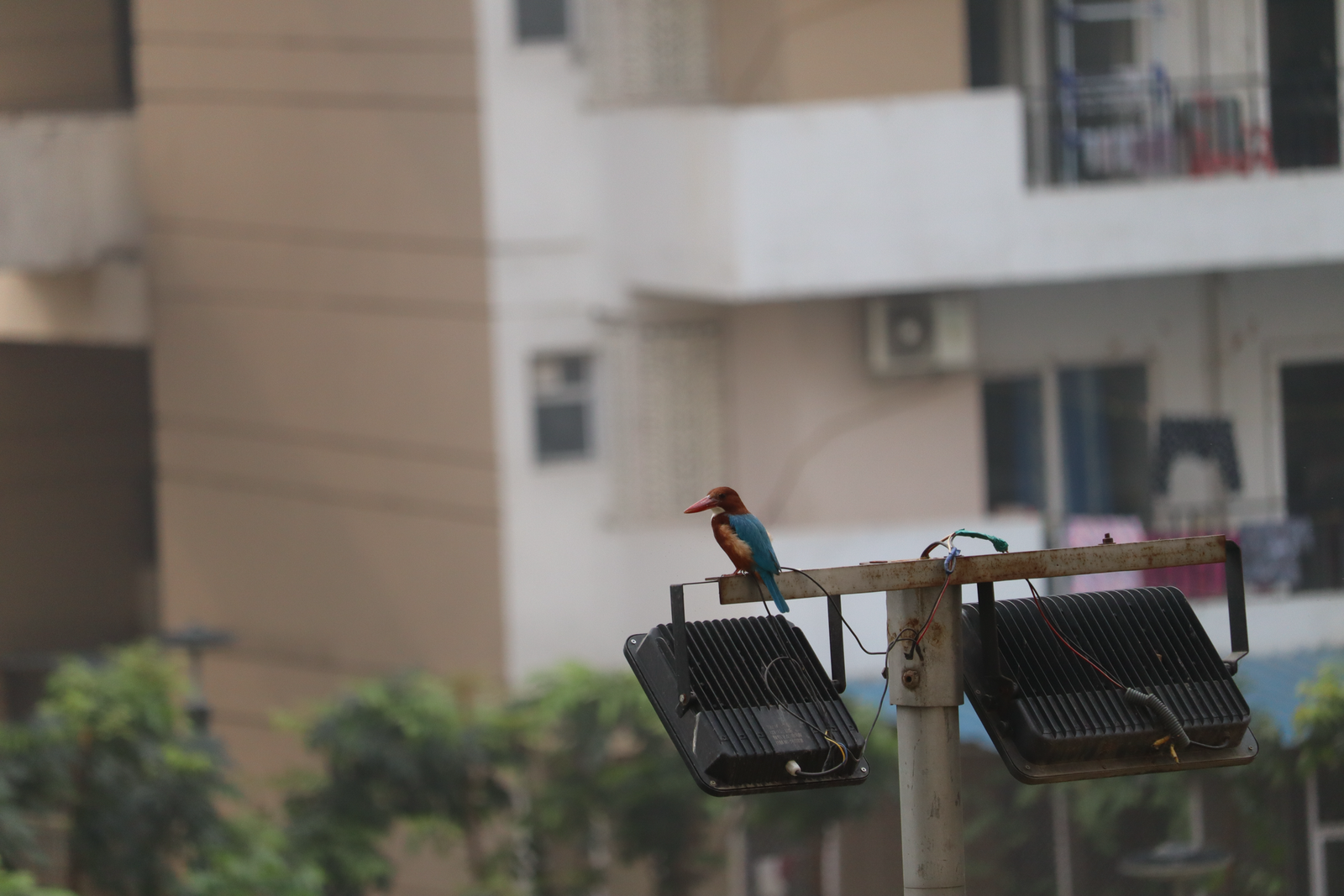
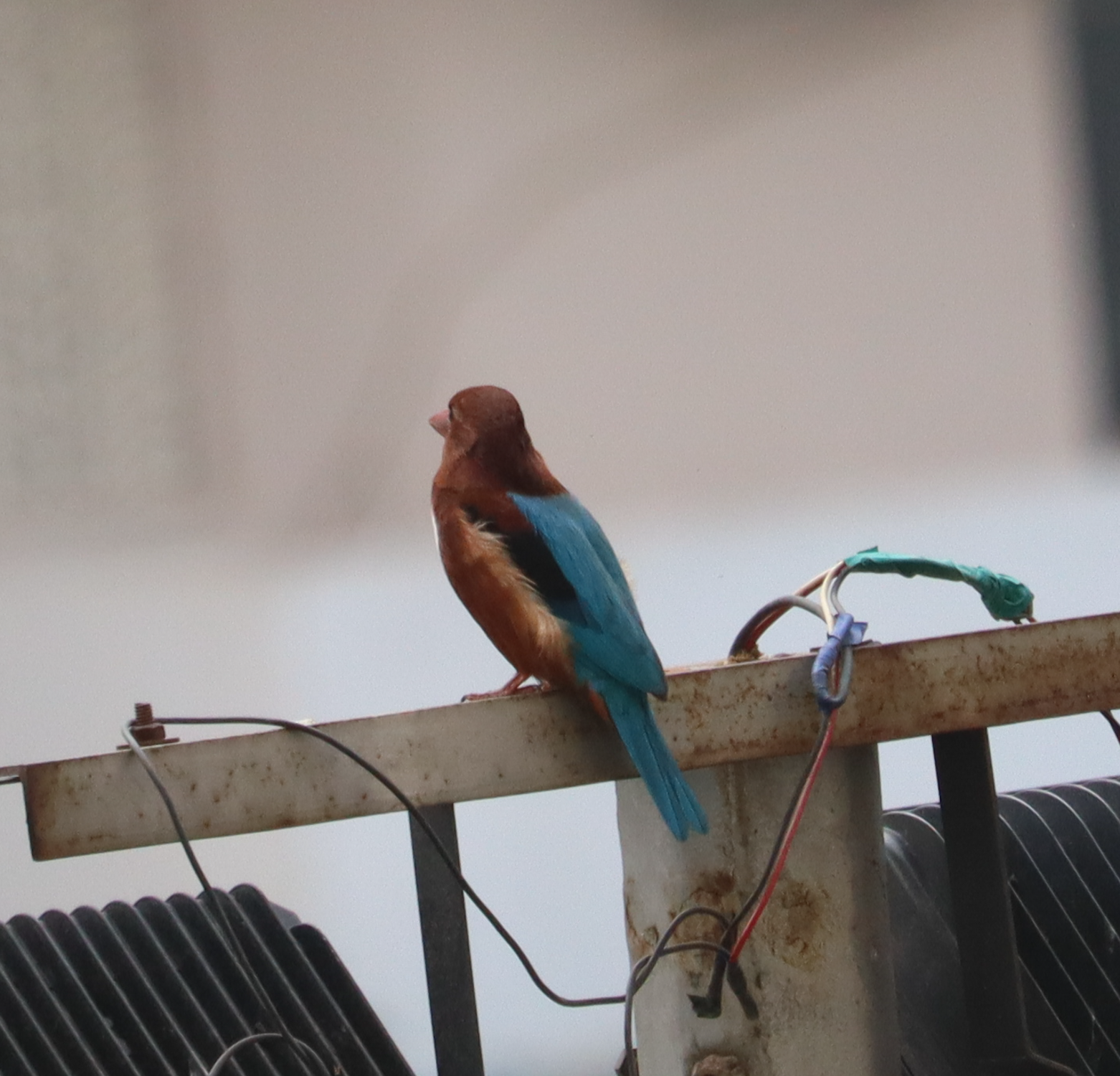
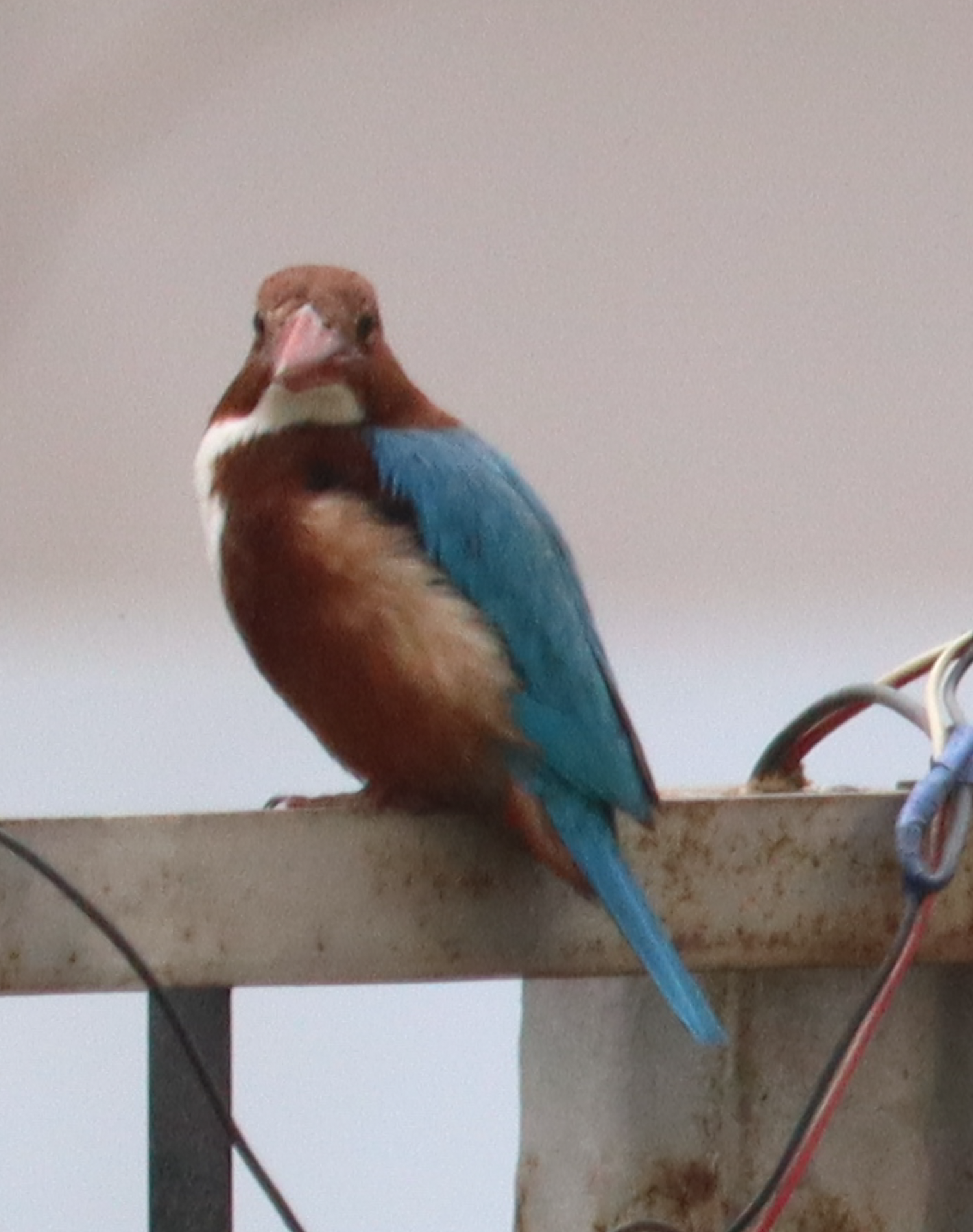
Halcyon smyrnensis. Note the large and robust bill and the long tail | Photos are my own
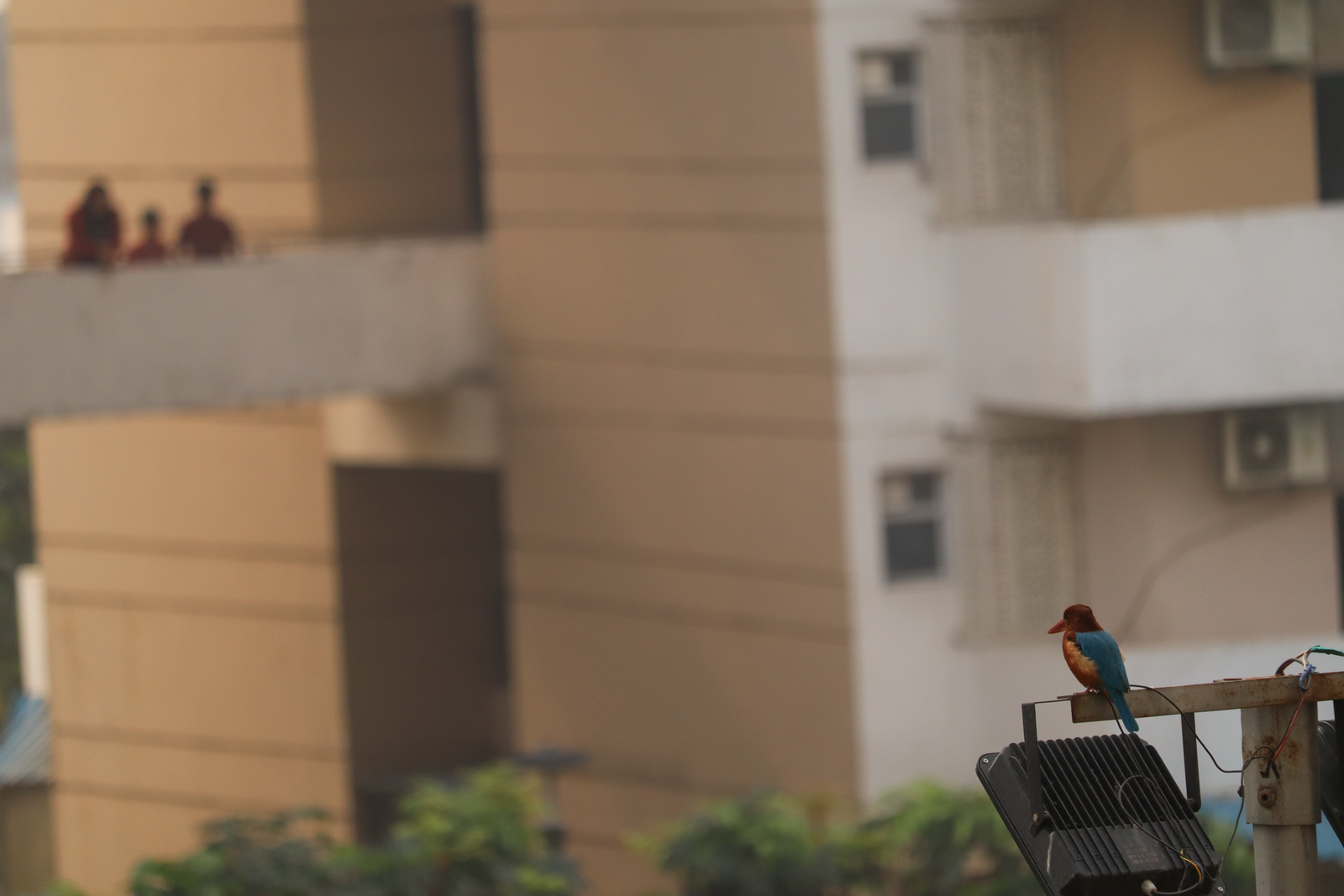
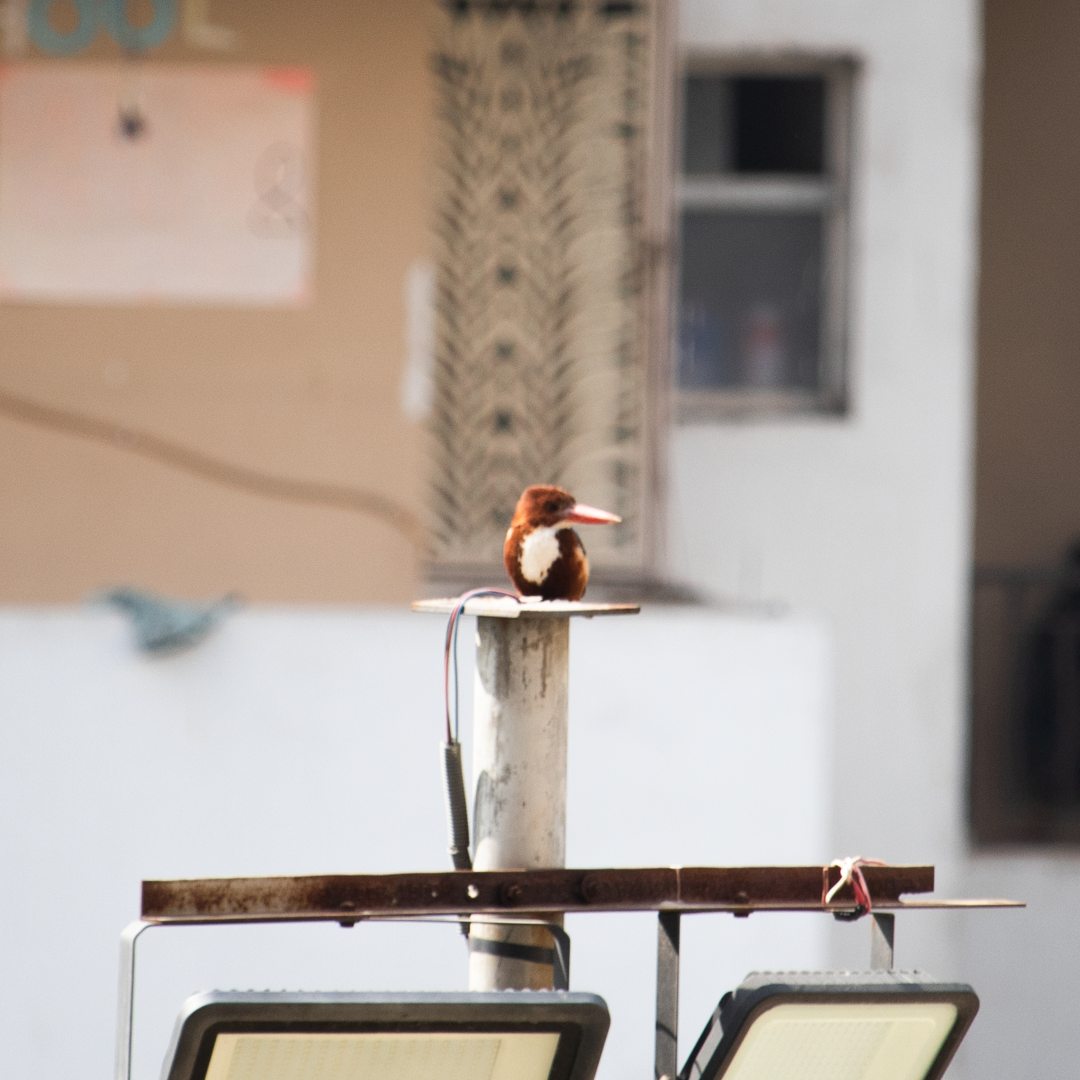
Many people may wonder why kingfishers sit on high heights. Here’s the answer: Alcedininae actually are not fans of big heights. Cerylinae are almost equivalent of the alcedininae in this perspective. But halcyoninae, the largest subfamily, has species who sit the highest of poles. And that is because, the higher you are, the more easily you can tell what something far away is. And halcyoninae species prefer to live away from water, so it isn’t easy to find too much prey. Hence, for finding food, they have to sit on high poles. You can see an astonishing gallery of most of the species over here.
Members of the alcedininae and cerylinae subfamilies are mostly dependent on fish for a living. Sometimes, they may eat other prey near water such as frogs. Halcyoninae eat insects, lizard, toads, and even snakes.
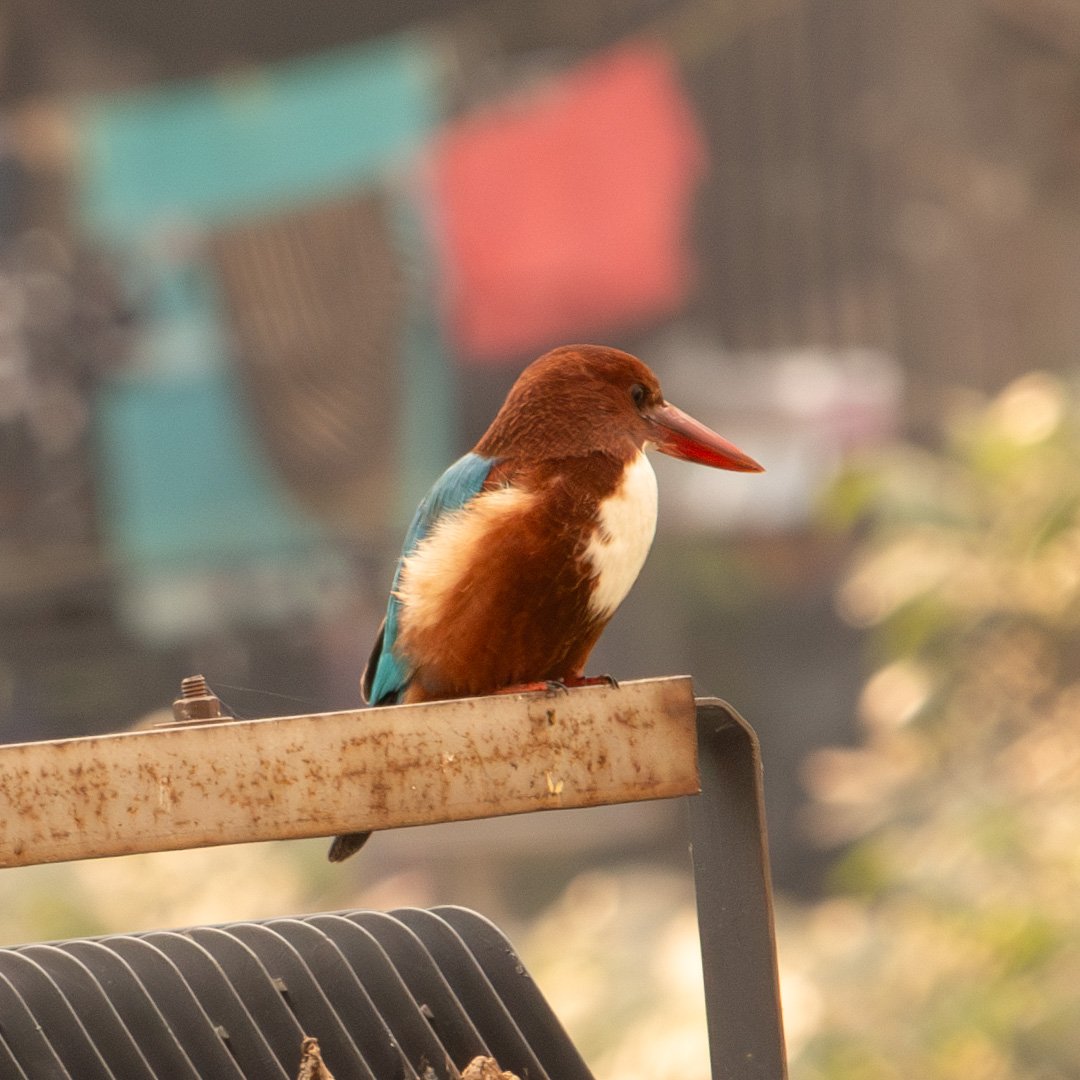
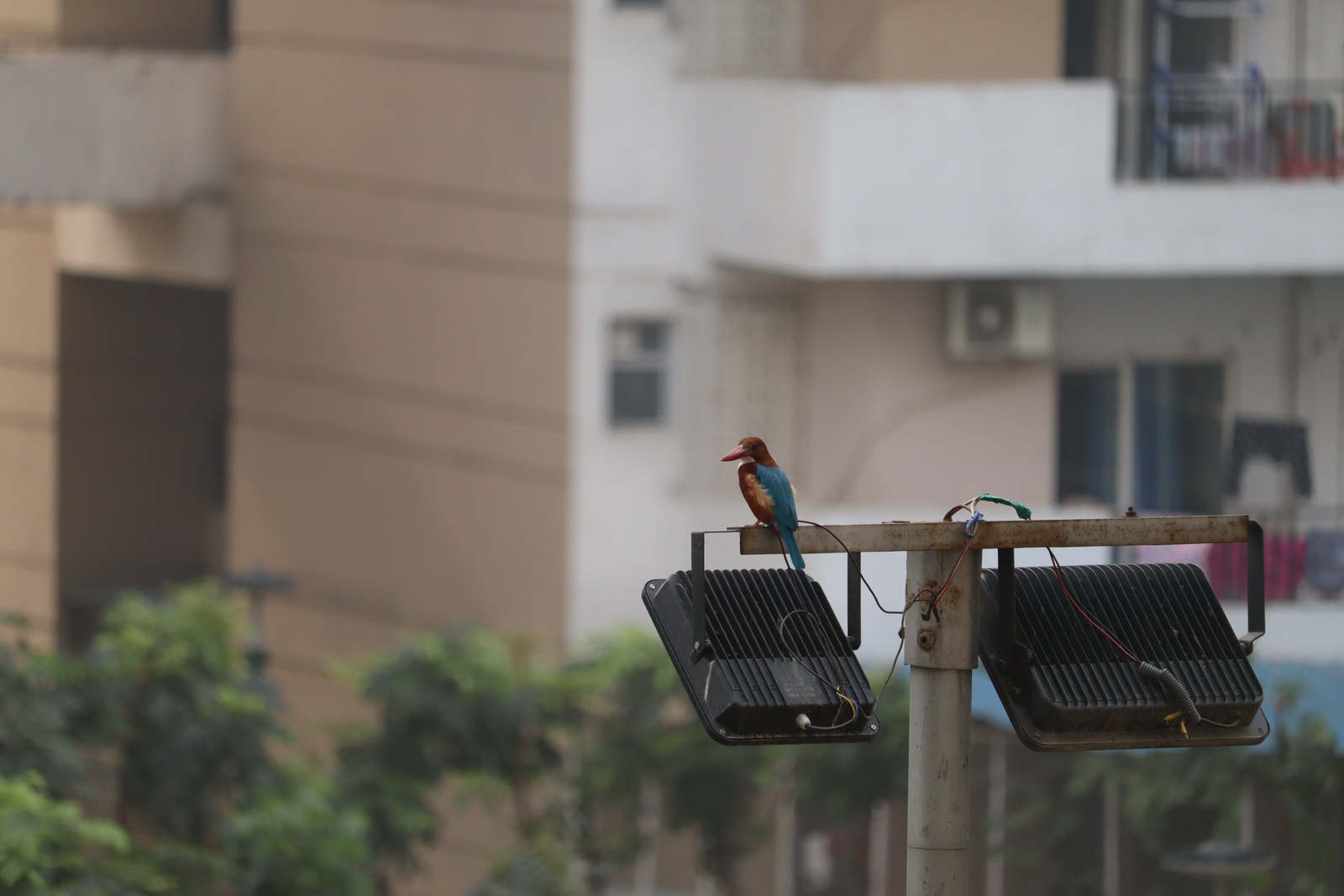
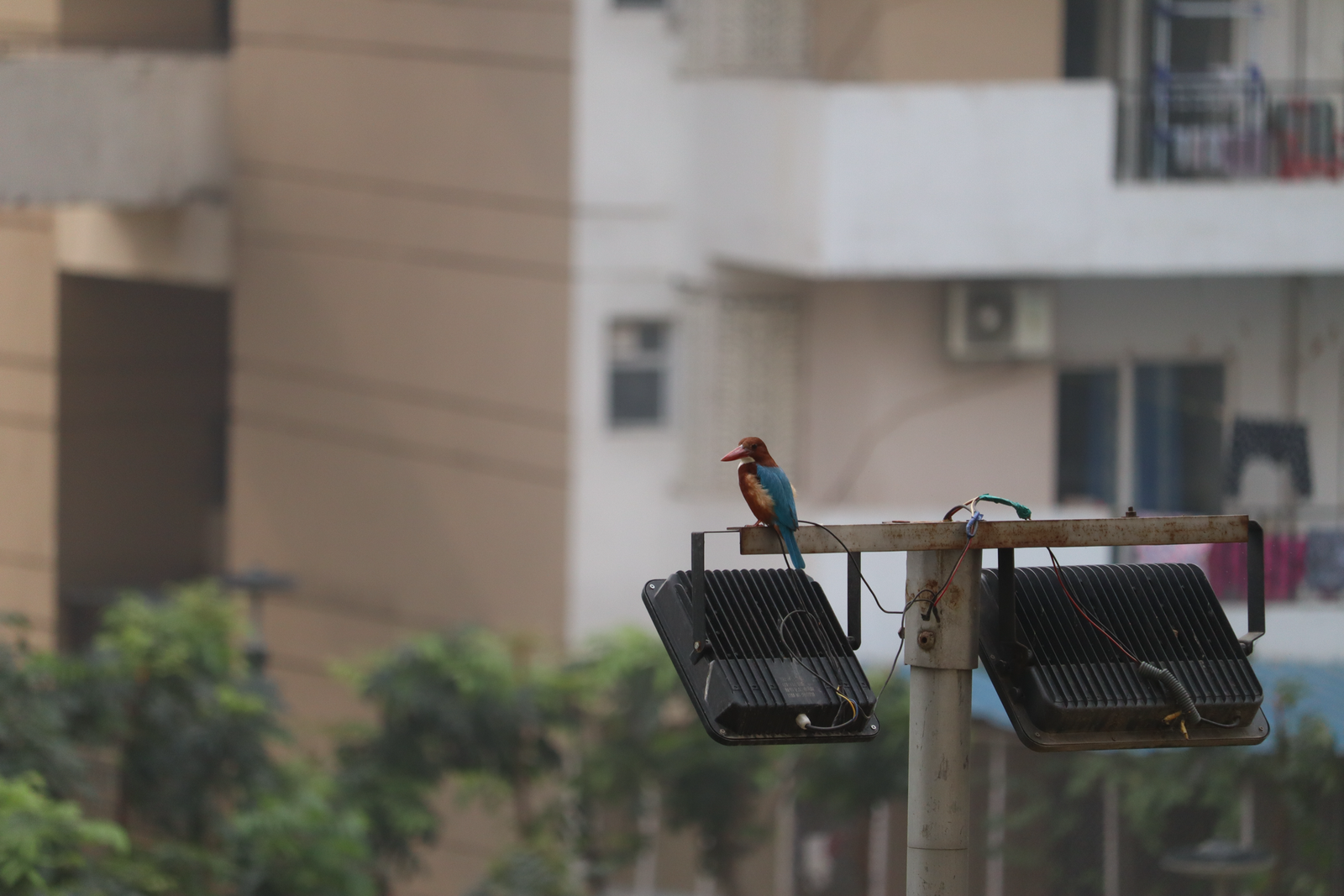
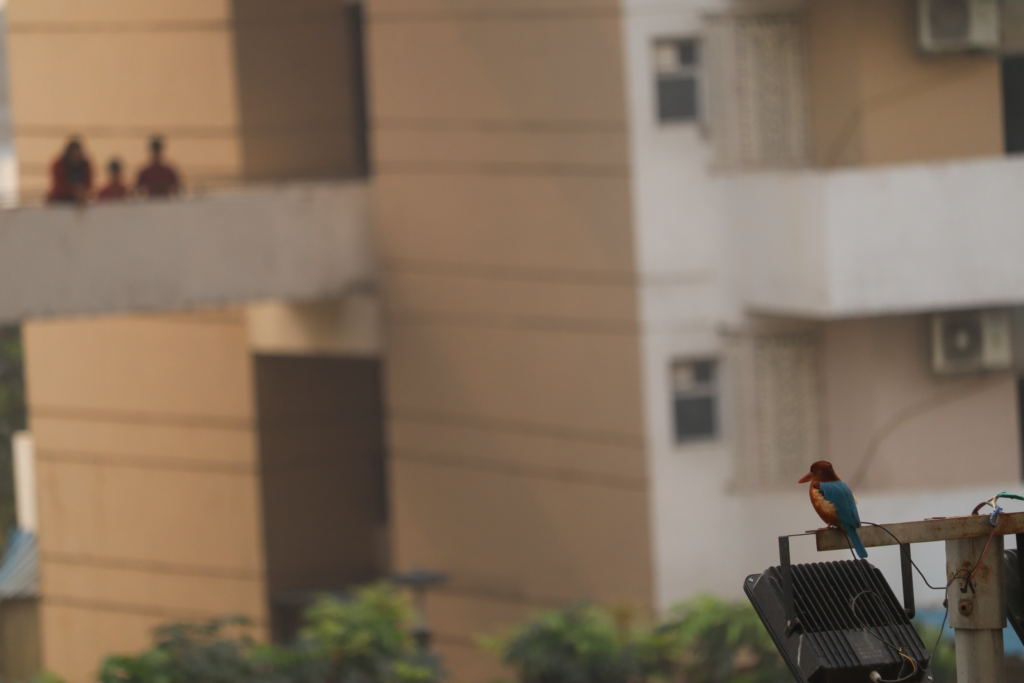
Halcyon smyrnensis, the only representative species I’ve yet photographed | Photos are my own
So overall kingfishers are great, underestimated, and very, very, misinterpreted. They are indeed an incredible part of nature’s art.
Pls comment your thoughts and rate the article. It’s a big thing for us!
Bird Birds