
Mole crickets seldom come out of their burrows, and finding one give a rare moment to observe their splendour.
The Incident and Etymology
Before we get to one of the cutest and most bizarre Orthopterans, I will recall the incident about how we found it in the first place. I am not not recalling the previous incident, when I saw a mole cricket for the first time, but the incident that I caught the second one, because I did not get any nice photos of the first one. So here is what happened –
It was another day of observing the “rainy season (i.e. monsoon) insects” (The word I use to refer to the insects which get attracted to light during that time of the year), when my mother called us, informing us that there is a big insect flying in the air, and as soon as we saw it, it started flying down to the ground, and started to run so fast and efficiently that its large slender body with its pale ochraceous colouration made us feel that it was a house gecko instead, which were seen time to time in my house, running on the walls.
We still tried to catch it, and we did, only to find out that it was a mole cricket, and we got an opportunity the get better photos that I did the last time I got one!
I came to know about mole crickets from seeing observations on iNaturalist.They are found worldwide, but usually are very tricky to find. Knowing about them already enabled me to identify it (at family level, Mole crickets are a family, Gryllotalpidae, coming from the Latin words gryllus, which means cricket, and Talpa, meaning mole).
Mole Cricket Anatomy
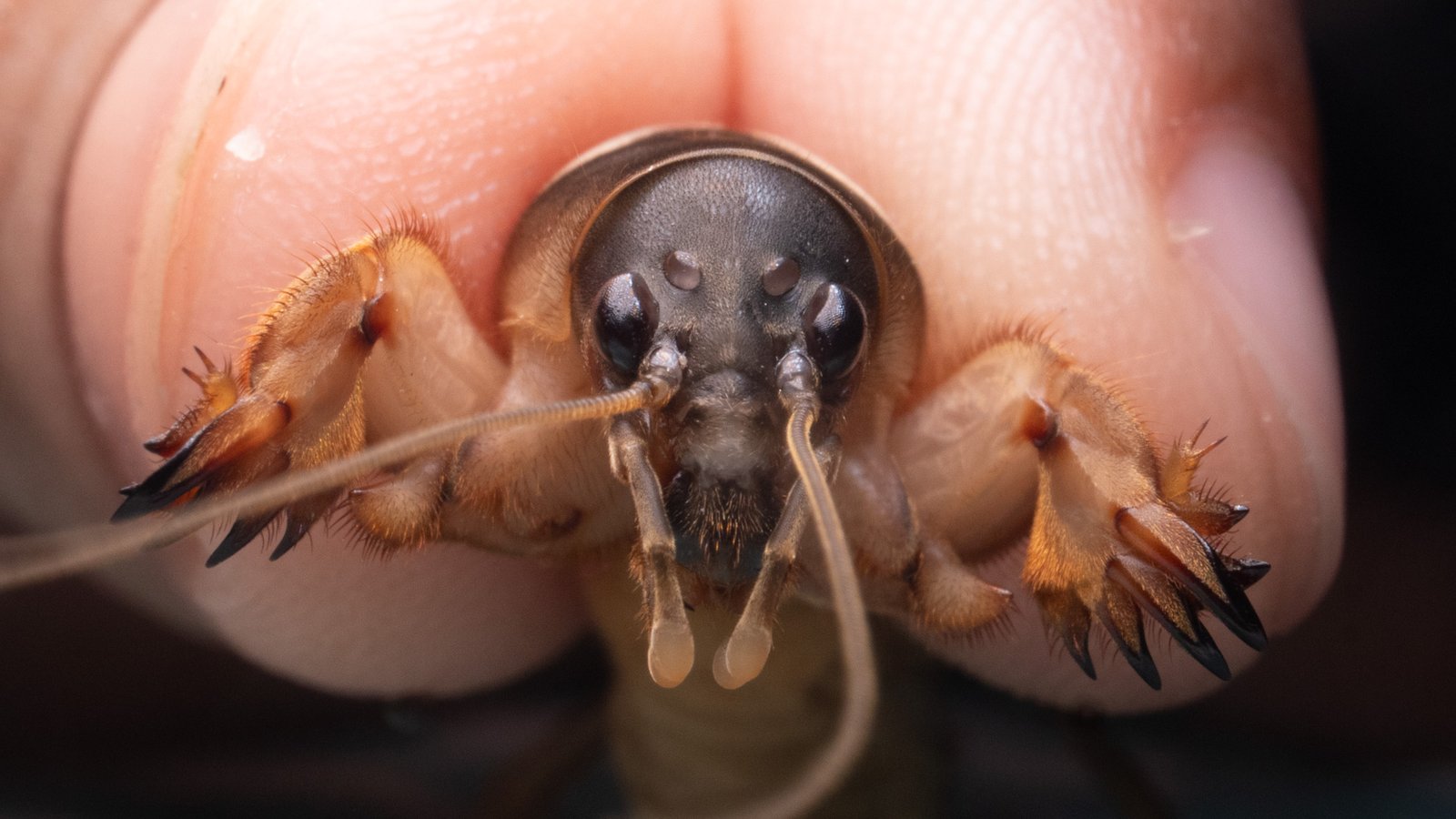
Now, let’s discover its anatomy, starting with the face, using the photo of the face we used as the featured image. Just click/tap on the icon, and it will tell you the name of what part of the face is next to it.
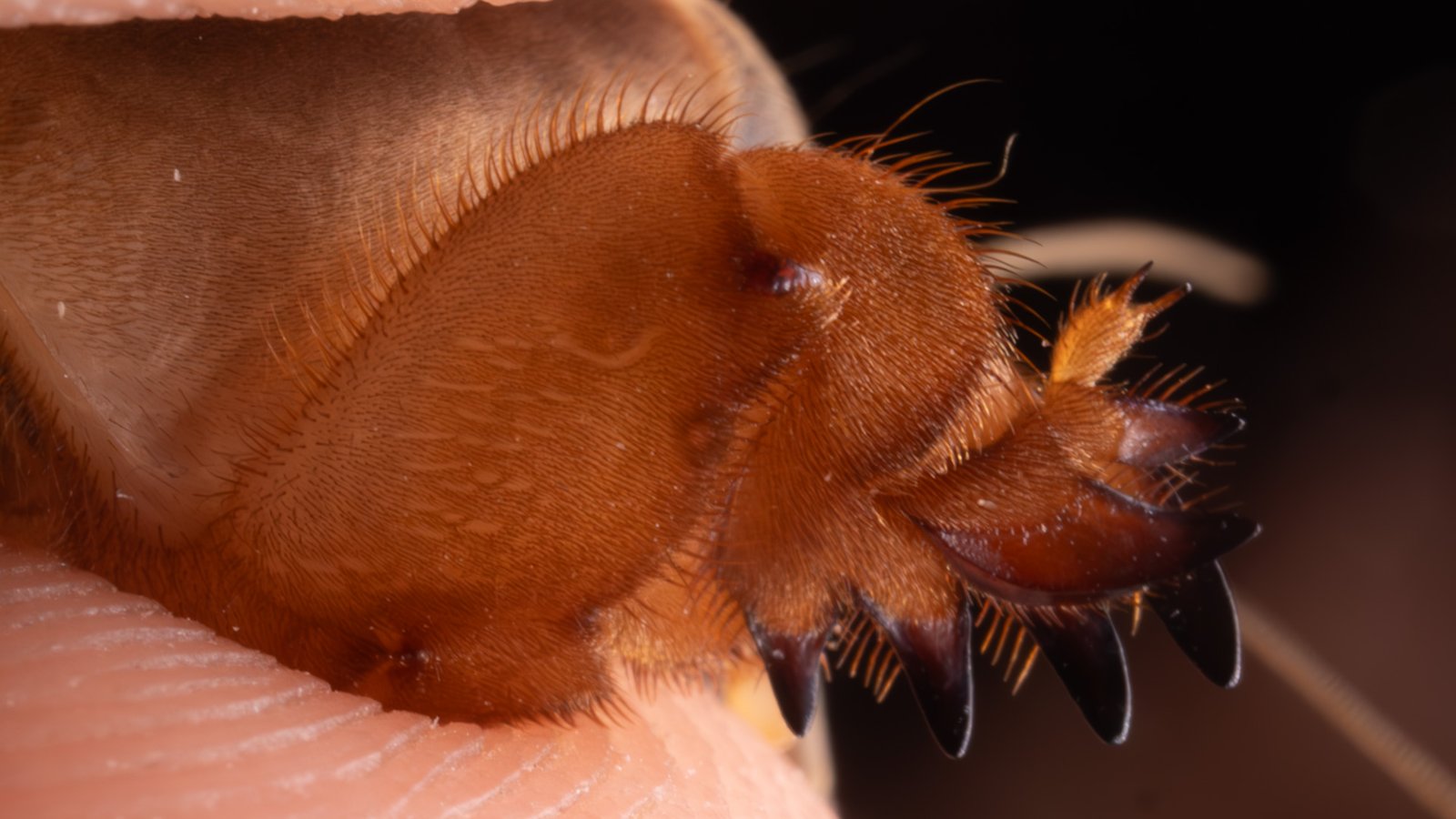
So now we will take a look at their legs, which are adapted to digging. There is more written about this later in the article.
Let's Start Digging!
Mole crickets rarely come out of the ground, as they live, sing and mate underground. The use their tools (legs) to dig, and dig quite fast. Living underground offers protection, because despite their hard heads and thoraxes, their abdomen is soft and smooth, another feature that I like about them. For predators, it’s an easy kill above ground – but not underground.
They use their “hands” (those modified forelegs, I used this word because they are quite reminiscent of hands) to push soil aside, and I know this based on my experience with this one, as whenever I grabbed it by the sides of their legs, they will push them apart. Mole crickets are friendly, cute and harmless, they won’t do anything to you.
Mole crickets get their name from these front legs, and their subterranean lifestyle.
They are amazingly good at escaping predators, breeding fast, etc. & here is where the problem starts:
As Invasive Species
Due to their amazing adaptability, Neoscapteriscus sp. had recently become invasive in USA:Florida. I do not live there, as I am in India, and so my mole cricket is likely NOT invasive, but in those areas, it has become a problem, competing for food with other members of its family in that area, and in the future, will likely end up extirpating (i.e. making a species regionally extinct.) them.
The problem is that the people are defaming the mole crickets, and in this may end up killing native species, and therefore, are actually contributing to extirpation of certain species.
Other creatures are cute too!
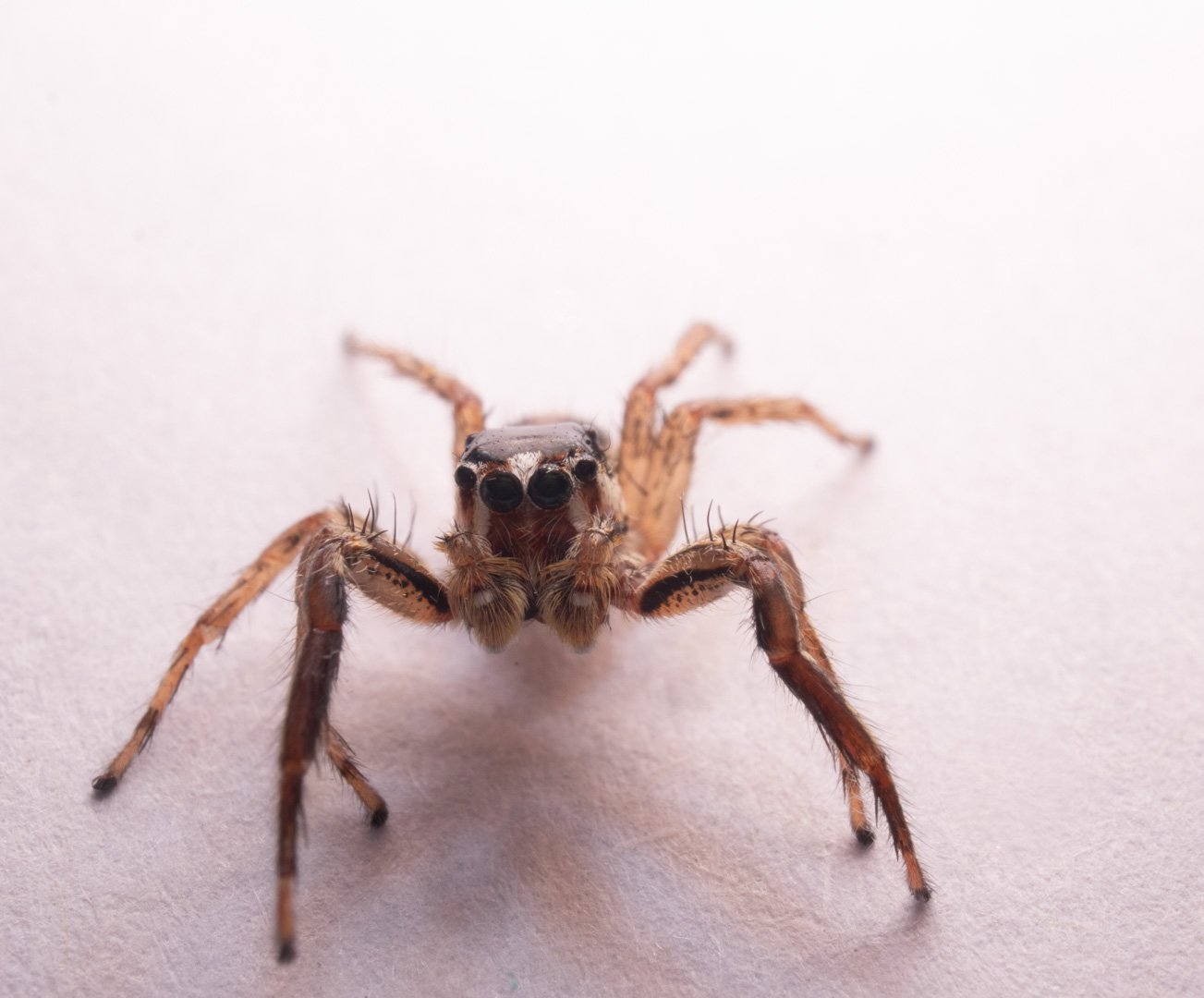
Jumping spiders, also called Salticids, are the most diversified, unique and adorable spider family. Coming in all shapes, sizes, colour, etc, lets dive in and find out about them and their hidden secrets.
Enjoy The Melody!
Mole crickets use trumpets!
Really – They knew how to amplify sounds using trumpets! They use “exponential horns”, whose construction varies in species. Some species can only be differentiated by the shapes and deformities of the horns and song. They use stridulation, like other crickets, but do so underground. The attracted female will mate underground, as mentioned.
A female can hear them from 30m due to these “exponential horns”; Comparable to that of Gryllus (true crickets), who do not use this method, with the audibility range (for females) being just 5m. That’s a very big difference – I mean this is 6x that of a Gryllus! Exponential horns increase not only sound and audibility exponentially, but also breeding, and therefore they populate very fast before you even notice them!
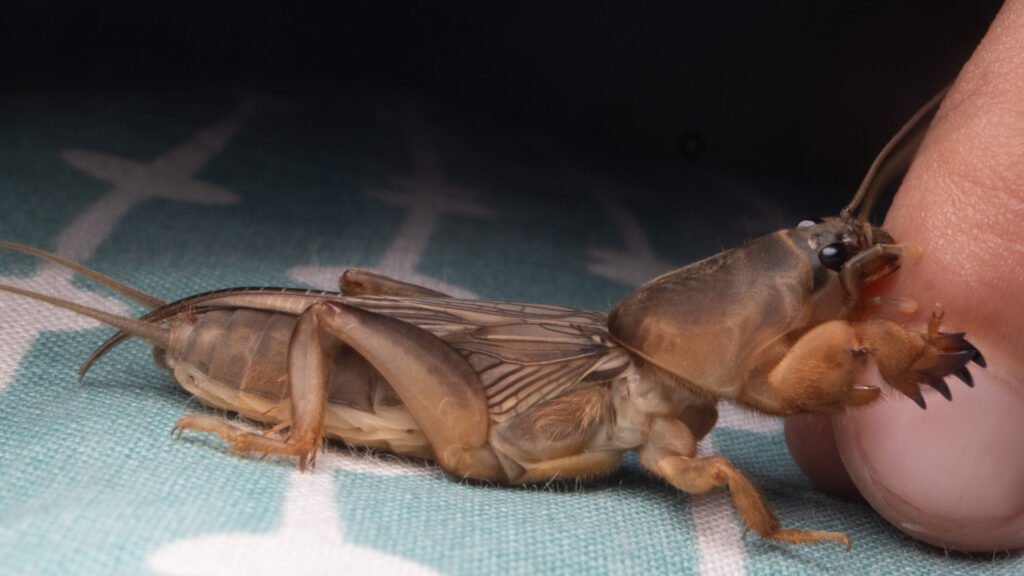
Here is a mole cricket, in comparison to my (younger) brother’s fingertip, I think you will be able to understand that they are larger than ordinary crickets, but have smaller forewings. As you can see, forewings are short and the long hindwing is even surpass the apex of the abdomen!
If would like me to add any info, or have some questions related to Mole Crickets/Gryllotalpidae, write in the comments, and don’t forget to rate the article, it means a lot to us!