
Jumping spiders - An introduction
- Eats - Insects, smaller spiders, and even other small creatures like isopods and springtails.
- Safety: Safe to handle (Even bare handed!) They do not bite.
- Found: Worldwide (Except Antarctica, Greenland, and other polar areas)
- Habitat: From plants and walls in urban areas to trees and weeds in forest, and even on soil. They are almost everywhere. There may be one nearby you while you read this article.
- Size - ~1mm (Neonella spp.) to 2.5 cm (Hyllus giganteus). Usually, they will range from 2-3mm to 1.2 cm.
- Vision - Great!
- Photography - Not easy (They will run and jump)
Note – Jumping spiders have cute faces, so many nature photographers often ONLY take the photos of their faces, to get more likes on social media, but this is NOT OK as it does not allow identification of the species.
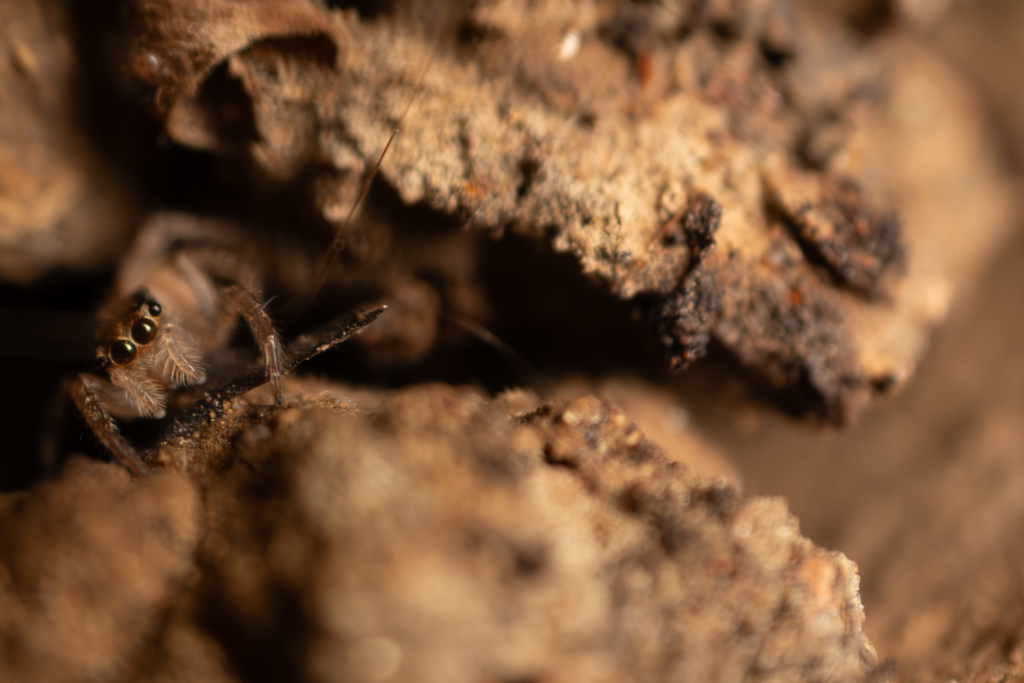
There is a spider hidden – Can you find it? Tell us in the comments!
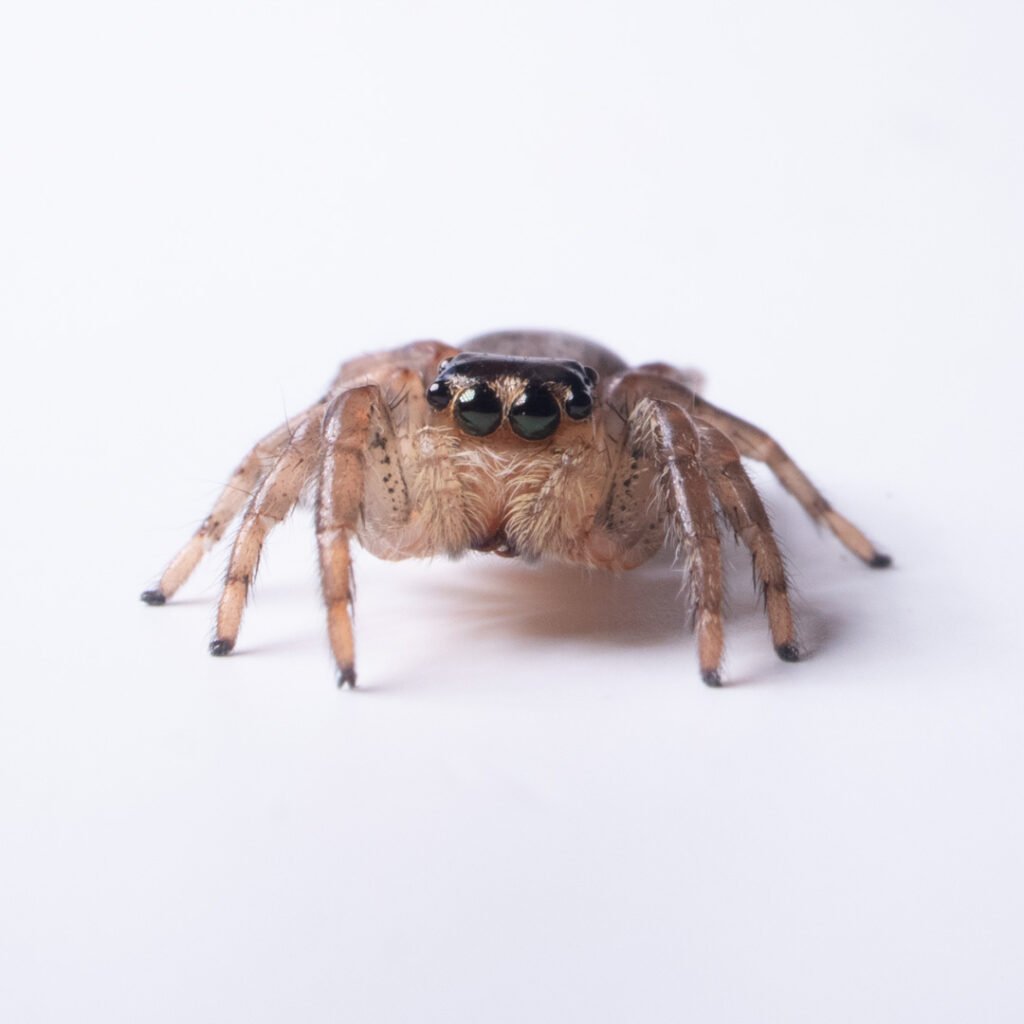
The secrets they hold...
- Their adaptability,
- Their eyes,
- Their camouflage,
- Their name,
- Their legs,
- Their hunting strategy and…
- Their escape plan!
Secret #1: Adaptability
As noted the jumping spiders are found literally everywhere (Reminder, there is probably, though not necessarily, one of them near you). They are actually capable of forebearing hot temperatures, an example of which is – Plexippus minor. It was first discovered in the UAE, then later record in the Thar Desert of India, both areas being quite dry. Yes, there are also records from the Sahara!
However, Jumping spiders are not well adapted to colder environments, which becomes the reason for the maximumdensity of species in the more tropical regions (Like where we live, in India, therefore we have plenty of jumping spider photos). However, many genera, like Hasarius, Phidippus, some species of Plexippus, and even Phintella are synanthropic, i.e. can be found in human spaces.
Due to this, they can reach a wide variety of prey, of varied sizes, and that is one of the things that turns this “cutie” no better than a huntsman spider. But that does not mean that it is the same as a huntsman spider, lynx spider, tarantula or a trapdoor spider. All of the other related families can be distinguished from the jumping spider due to the position of the eyes –
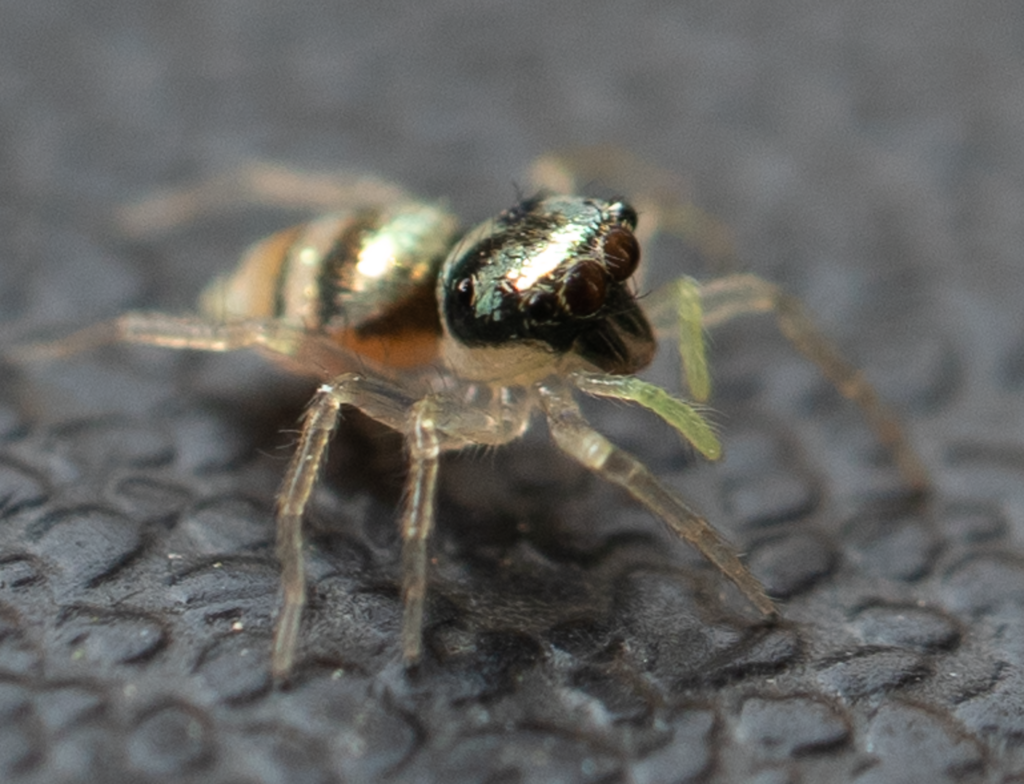
“However, many genera, like Hasarius, Phidippus, some species of Plexippus, and even Phintella are synanthropic, i.e. they can be found in human spaces.” (Here is a female Phintella cf. accentifera) | The photo is my own.
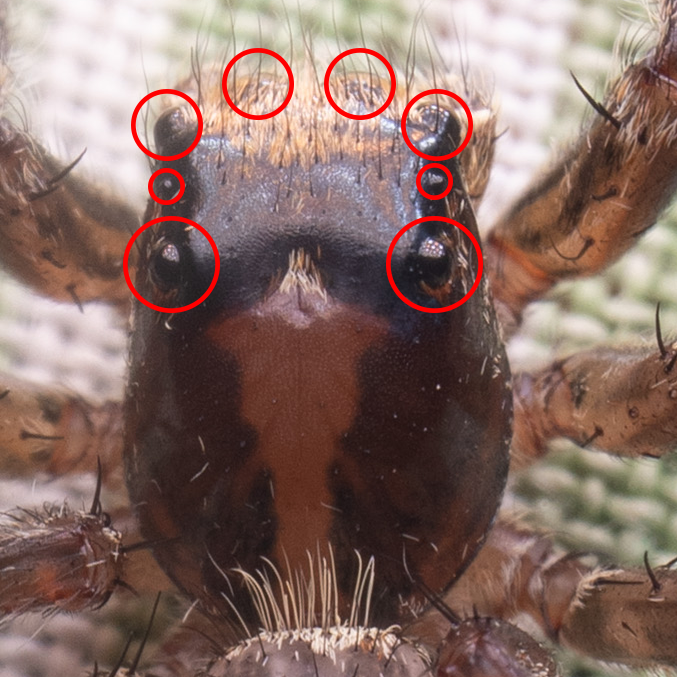
“All jumping spiders have 8 eyes” | The photo is my own.
“Their pair of eyes in the middle on the front are protruding backwards like a telescope, that helps them change their narrow focus range and let them focus different areas” | The video is my own.
Secret #2: Eyes
When it comes to the jumping spider’s vision, I had labelled it great, and this no joke, as you can’t just go and sneak up them, making photographing them not that easy.
All jumping spiders have 8 eyes. And they have even more tricks. Let’s start from the back. As you can see in the photo besides, there are 8 eyes (circled), all having their own purpose. The eyes most towards the back are not very great, and cannot see well, the can see no more than B&W blurred blobs! These can detect predators sneaking upon them. However, the really great vision is also included, just in the front 4 eyes. The next pair of eyes, in between the previous pair and the 2 pairs at the front, is much, much, smaller. It is the smallest of these eyes, almost invisible to the human eyes. Their vision here becomes even more blurred!
Now to the front of the jumping spider. I think that those eyes are easier to see in some of the previous images, so you may use them as a reference. The ones to the side are not capable of seeing colours, but still have more detailed vision. Now we come to a the middle eyes. They can see colours much better than dogs and cats. The can even see UV light! Their pair of eyes in the middle on the front are protruding backwards like a telescope, that helps them change their narrow focus range and focus different areas. Their interesting eyes has attracted lots of research, one theory suggest the use of the depth-defocus method, in which it measures the distance by how blurry the object is.
They are intelligent and visually capable of seeing this till the level telling what’s bigger, smaller, and even recognise things that they see, because of their long term memory. They have the best vision not only for a creature of their size but some creatures even bigger than them! It has been found, that when jumping spiders see prey, then they will make a plan – how to approach it, from where to jump at it, etc. They can even HEAR things!!! The downside is the focus area is very small. However this makes them very cool. In fact, to jump to any area, it will also have to understand how to jump, how much force should it jump with, etc…
You may also like to read (about some insects on their menu!)
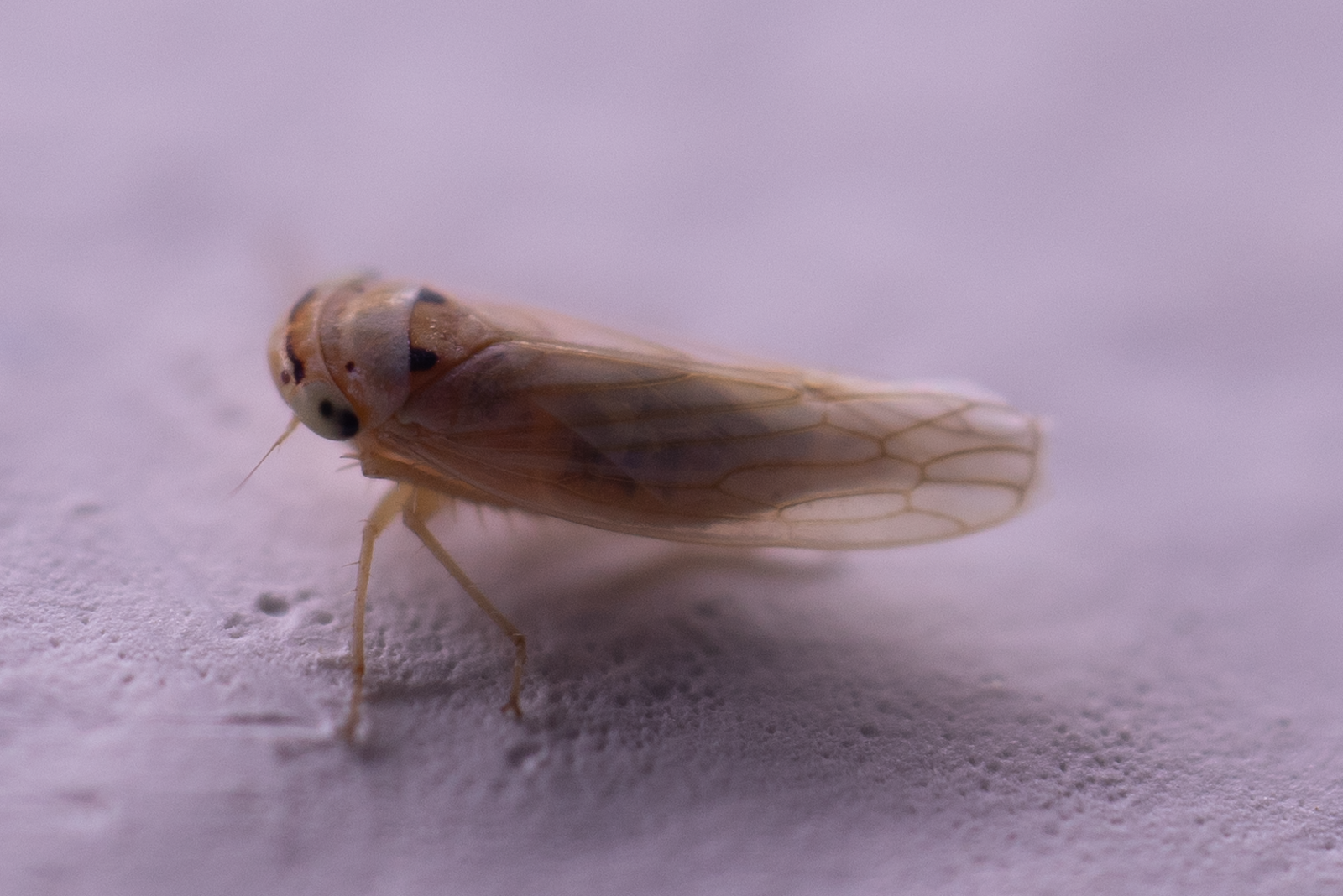
Monsoon in India is welcomed by the numerous insects who visit the light at night. This is a mesmerising catalogue to highlight the importance of further exploration in my country, India and for general awareness about insects.
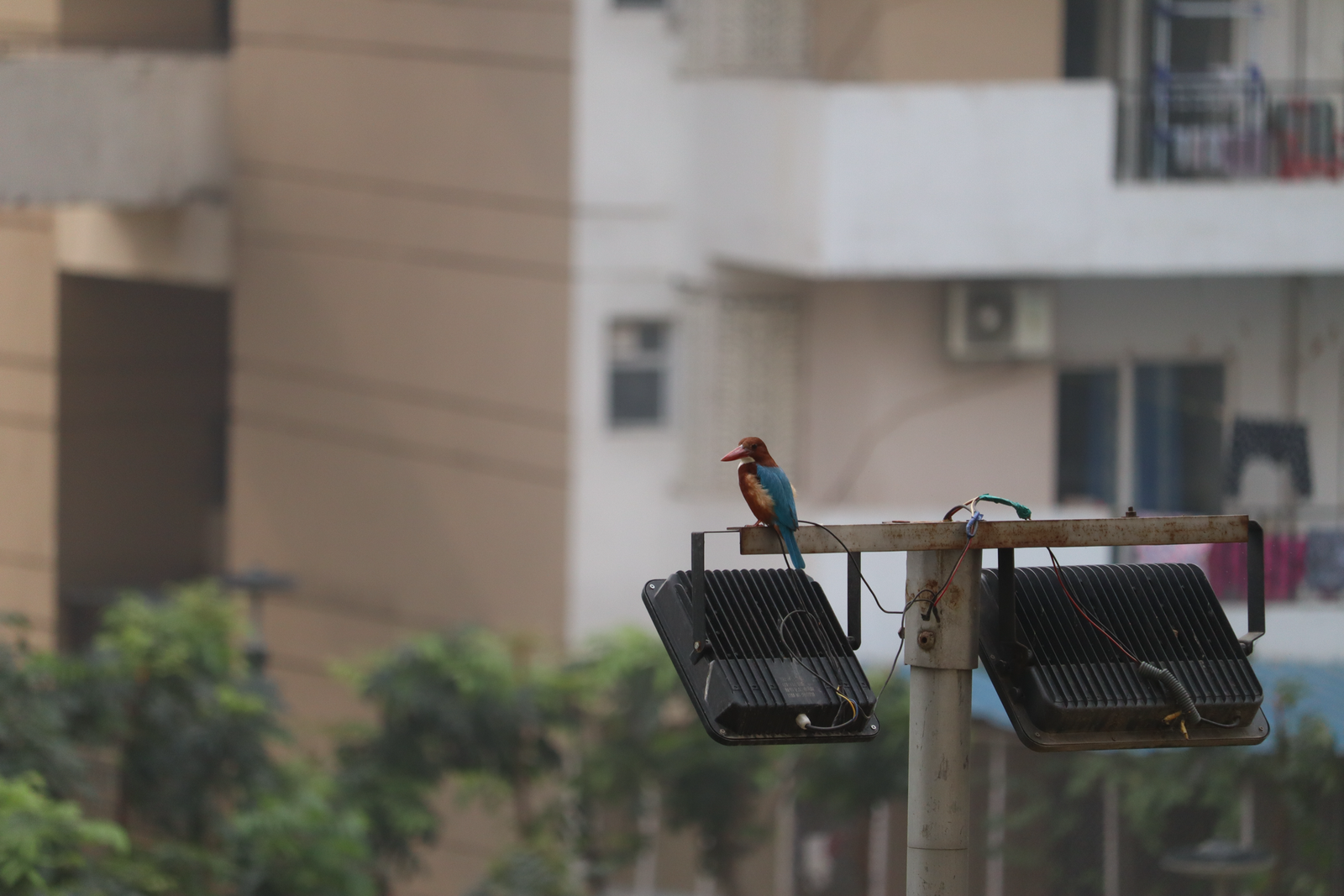
I have cleared out some facts about some of the most underestimated birds.
Secret 3: Camouflage
Most jumping spiders have patterns, one or the other, they have almost every pattern you can think. The camouflage may not hide themselves from humans, but actually, it hides them from creatures without good colour vision. Sometimes, they are good enough to even hide themselves from humans! An example is a 3-4mm jumping spider, given beside, which I found on a curry leaf in my balcony, which is not an easy find!
Secret #4: Name
That NAME – Jumping spiders, or for short, jumpers. This is in reference to the ability they are known for – Jumping!
Secret #5: Legs
Note – To practically see them move and jump in slow motion, you may see this video. Here’s how it works – First, they will draw a line of silk using its spinnerets onto the surface from where it jumps. Then it will expand the first pair of legs (counting from the front), to prepare to launch at the target. Then, it will expand the front 2 pairs of legs, and prepare to jump… 3… 2… 1… Ready.. Steady… Go…! It leaps in the air with the help of the third pair of legs. (Are you surprised? Really, 3rd pair. You may check that jumping spider video for that, this is a second reminder).
Now, it will get into a position for landing, where it will get into a position that it can catch the prey item, or the next surface. Then, it quickly detaches its line of silk. Why will such great jumper need a lifeline? It is indeed accurate, but this is a precaution, that it doesn’t fall. Incase it fails to jump to the other side, it gan go back with he hip of the silk line it made earlier.
So how to the jumping spider use its secrets?
A very practical question. Keeping mind the secrets by their no’s and see where they come in in these following scenarios (Note: these incidents are just to demonstrate the possibilities and are not based on real incidents.) –