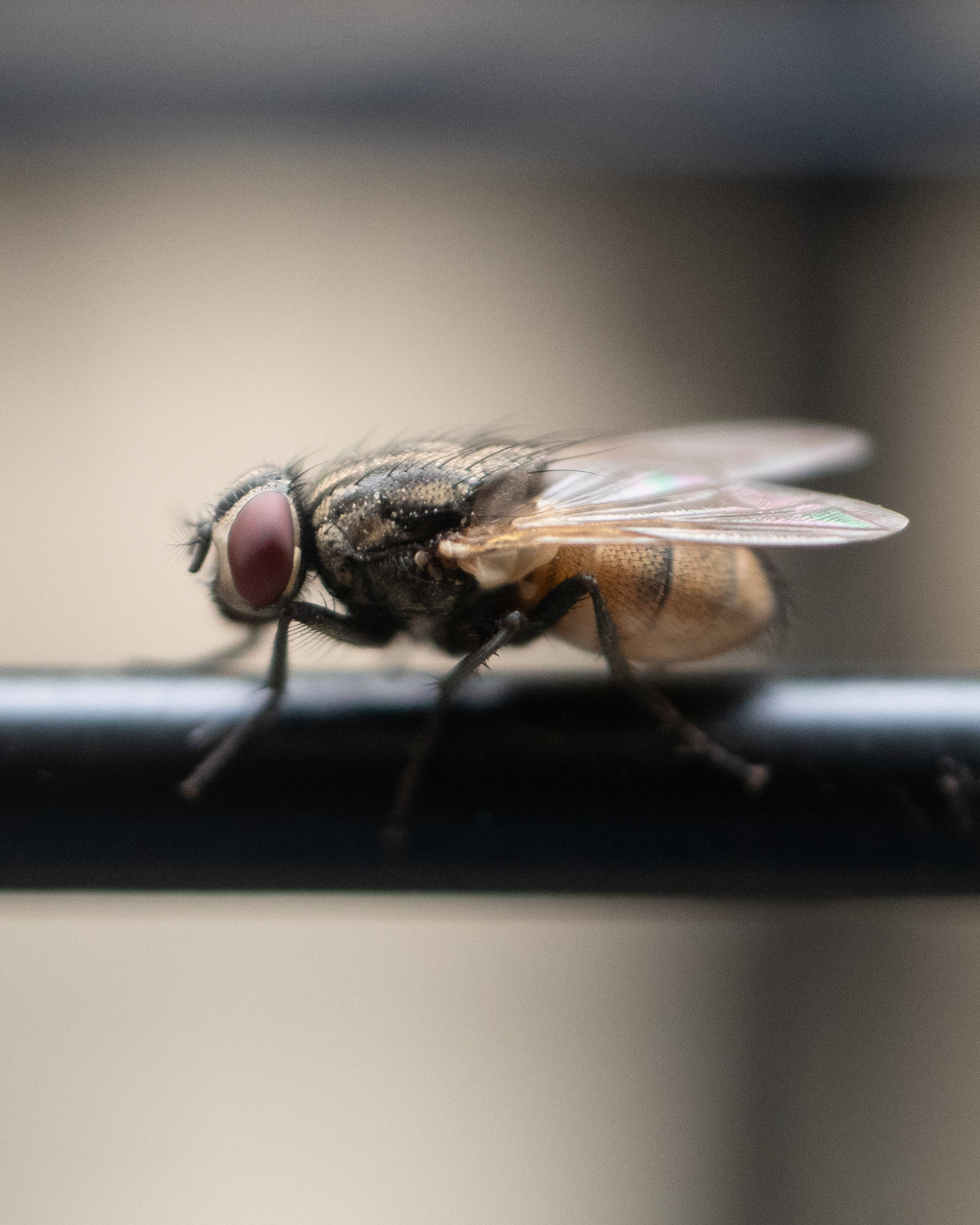
Just being called a pigeon louse fly doesn’t make it confined to pigeon hosts | Photos are my own
Pseudolynchia canariensis is a species of fly oftenly referred to as the pigeon louse fly. This article will tell you everything about this fascinating species, from identification to host species.
Pseudolynchia canariensis belongs to the family hippoboscidae, all members of which are known to suck blood of birds and their nestlings. They are most closely related to tsetse flies of Africa, but yet don’t pose any threat on humans. They are safe to grab and handle. They are usually the size of a housefly, but the flattened bodies, head shape, long setae (i.e. insect hairs), the shape of the wing, the shape of legs and the mouthparts are some of those hundreds of differences that exist. And not to mention, they are good fliers when provoked!
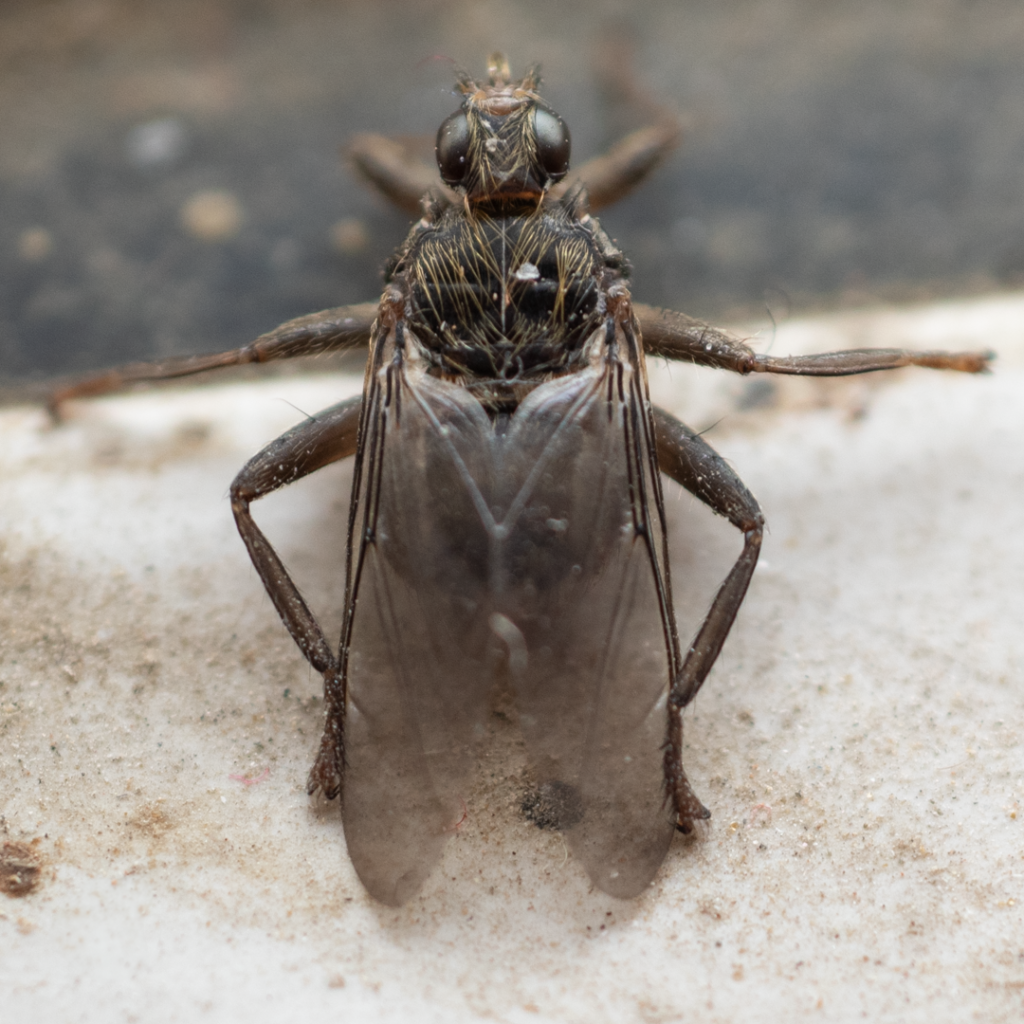
Note the long hairs (setae) and the unique head in combination with thick legs | Photo is my own.
This species is found worldwide. It can be distinguished from it’s closest relatives as follows:
The setae are pale yellow, and quite long.
The posterior edge of the scutellum straight (see that line between the wings? That is what has to be checked)
All the innocence of this little insect had been concealed by myths from the past.
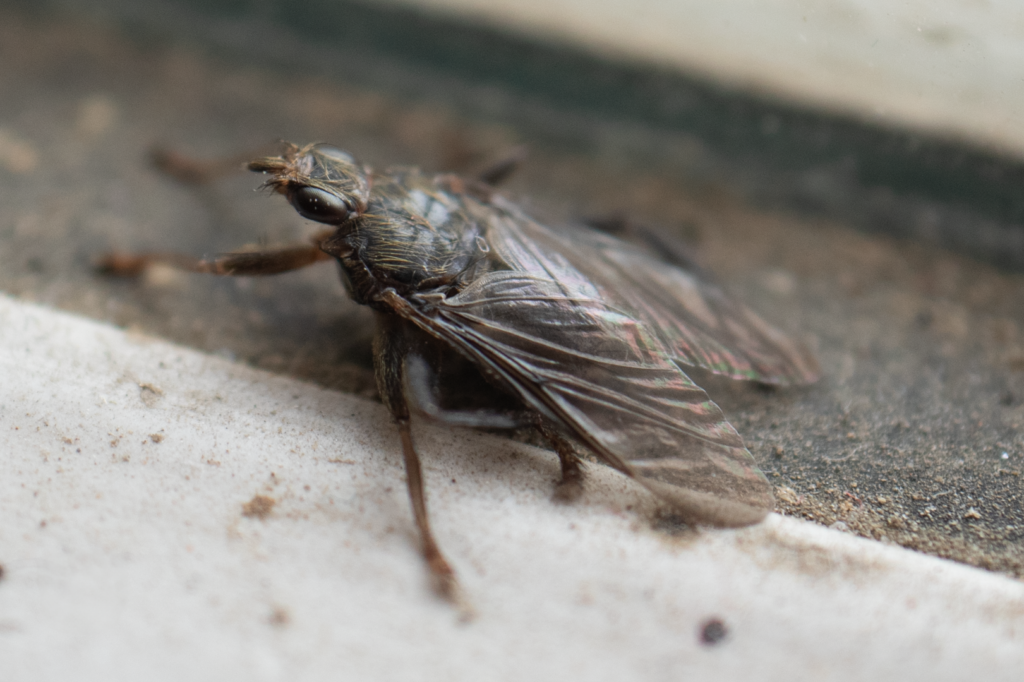
The same indivisual from another angle | Photo is my own.
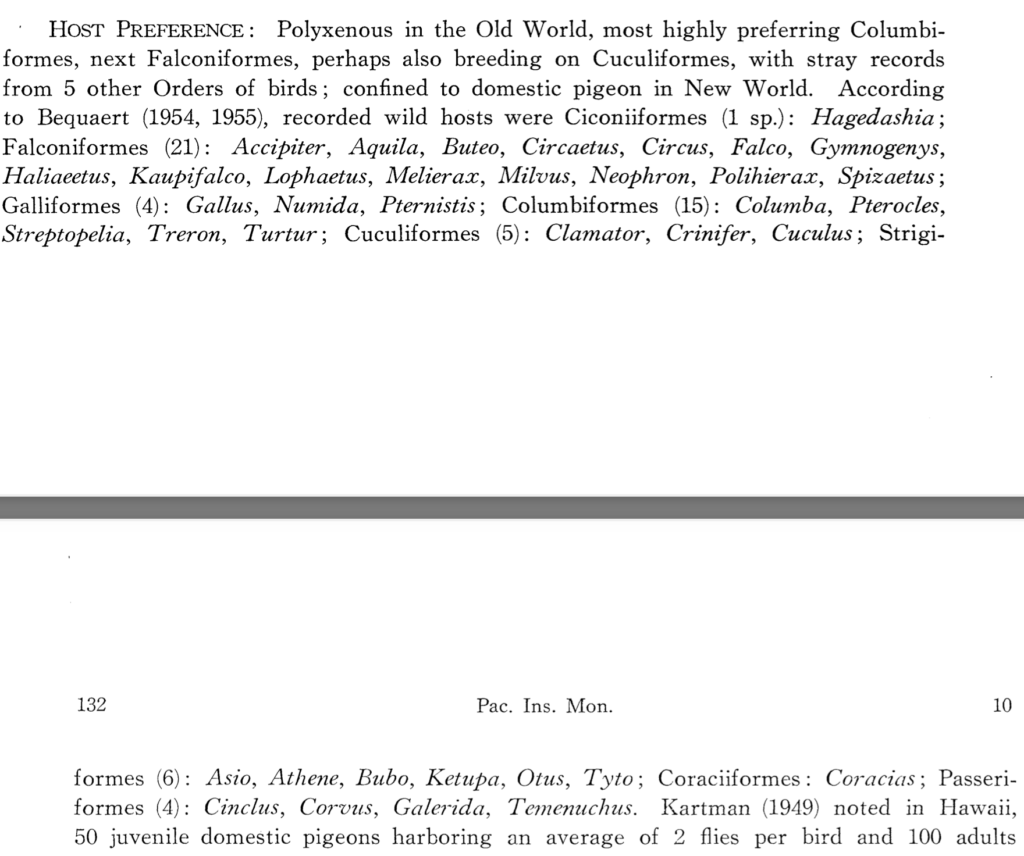
The only wild hosts are different species of pigeon and doves, which comprise of the Columbidae family. But in domestic settings, they are known to suck blood from species from 13 families! It’s worth mentioning that they are confined to (domestic) pigeons in the New World. Below is a screenshot from a pdf of an old research paper I found on the web which will make you realise what I meant.
A screenshot from a research paper (from pacific insects monographs series: Maa, 1966: On The Genus Psuedolynchia Bequaert) showing how many host species has it adapted to. They are all scientific names.
Probably the best photo elsewhere on the internet is here.
So overall, this is one of the coolest species I have photographed, but is yet very, very, underestimated.
Pls comment your thoughts and rate the article. It’s a big thing for us!